





































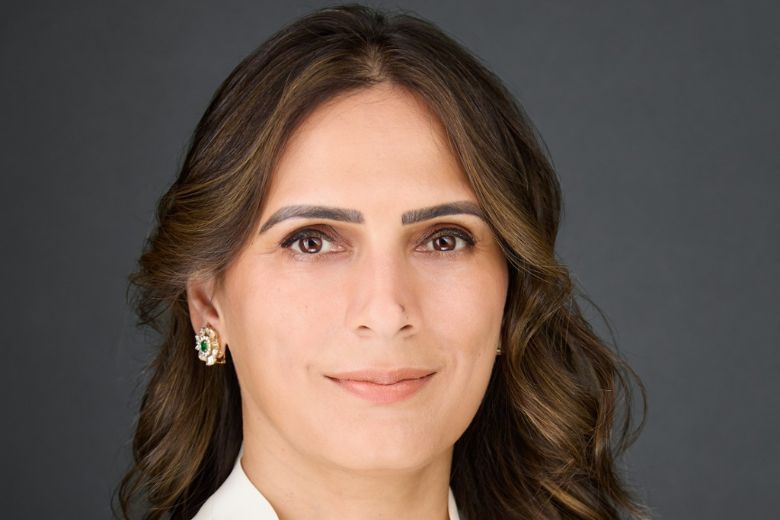
A Conversation with Aanchal Kotibhaskar on Boarding Education
As more families in the UAE explore international education pathways, boarding schools are increasingly becoming part of the conversation. Beyond academic outcomes, parents are looking more closely at the wider developmental experience, from independence and structure to global exposure and long-term opportunities.
In this conversation, Aanchal Kotibhaskar, Founder and Lead Education Advisor at XellED, Dubai, shares insights into how boarding education shapes student development, what families should consider, and how schools are evolving to meet modern expectations.
Education UAE: What key developmental advantages do boarding schools offer compared to day schools?
Aanchal: The distinction is less about academics and more about how the students’ time and environment are structured.
In a boarding setting, everything sits within one ecosystem, academics, sport, co-curricular activities and social life. Students are not spending time commuting between school, tuition and activities, which creates a far more efficient and balanced rhythm to the day. That time saving, over weeks and years, is significant.
More importantly, it allows students to engage more deeply. Evenings are structured around supervised study, activities and interaction, which fosters independence, discipline and a greater sense of ownership over their time. It is this combination of structure and immersion that tends to shape development in a meaningful way.
Education UAE: What value do international exposure and diverse peer groups bring to a child’s development?
Aanchal: Beyond cultural awareness, one of the most understated advantages is the network that forms.
Students are building relationships at a relatively young age with peers from different countries, backgrounds and perspectives. Over time, these relationships often become both personal and professional networks that extend well into adulthood.
At the same time, being part of an international cohort encourages adaptability and confidence. Students learn to communicate across differences, to understand multiple viewpoints, and to operate comfortably in diverse environments, all of which are increasingly valuable in a global context.
Education UAE: What are the most common concerns parents have, and how can they be addressed effectively?
Aanchal: Homesickness is naturally the first concern, but closely linked to that is the broader question of how a child will adapt to a completely new environment.
This includes adjusting to a different routine, forming new friendships, managing independence, and being away from familiar support systems. These are not small transitions, and they need to be acknowledged as such.
The way to address this is through careful selection and timing. Strong pastoral systems, attentive house staff, and well-structured onboarding for new students make a significant difference. Equally, ensuring that the child is emotionally ready not just academically prepared is critical.
When the environment is right and the child is ready, most adapt well. But it is the quality of that initial transition that often determines the overall experience.
Education UAE: How early should parents start considering boarding school education, and why?
Aanchal: Ideally, families should begin exploring this pathway two to three years in advance.
This allows time to understand the different types of schools, visit where possible, and prepare for admissions requirements without pressure. Many leading schools have defined entry points and structured processes, so early planning provides both clarity and flexibility.
It also allows families to make the decision at the right moment for the child, rather than reacting to timelines.
Education UAE: How are modern boarding schools evolving to meet the expectations of today’s parents and students?
Aanchal: There has been a clear shift towards a more holistic and responsive model.
While academic rigour remains central, schools are placing greater emphasis on wellbeing, pastoral care and communication with families. At the same time, there is increasing integration of technology within the learning environment.
Many schools are beginning to incorporate AI-driven tools to personalise learning, support academic progress and enhance classroom engagement. Technology is also being used to better track student development and provide more informed feedback.
Importantly, this is not about replacing traditional methods, but about complementing them, ensuring that students are both academically grounded and technologically fluent, which is essential in today’s landscape.
Education UAE: What advice would you give parents who are considering boarding schools for the first time?
Aanchal: Start by understanding the ethos of the school.
Each boarding school has a distinct culture in how it approaches academics, pastoral care, discipline, co-curricular life and overall student experience. These are not always visible in prospectuses, but they define daily life within the school.
The key is to assess whether that ethos aligns with the values, expectations and personality of both the child and the family. A strong academic environment alone is not sufficient if the culture does not feel right.
Where possible, families should engage directly with schools, ask thoughtful questions, and look beyond facilities to understand how the school operates in practice. When there is alignment between the school’s ethos and the family’s values, the transition tends to be far more natural, and the overall experience far more successful.
For more information, please visit
Further Reading:
- How Schools Can Support Students and Families During Periods of Remote Learning
- Collective Anxiety, Why Communities Feel It Together