







































Where Will You Go To University?
Choosing your university destination is a life-defining decision that goes beyond your academic studies. Each country offers a unique combination of education systems, cultures, career opportunities, and lifestyles. This series by UniHawk explores the world’s leading university destinations, helping you to understand what it’s really like to live and study in some of the most popular countries for international students.
Why UAE Students Choose to Study in Canada
Canada continues to be a popular choice for international students from across the Gulf region and beyond. Known for its welcoming environment, world-class universities, and proven pathways to permanent residency, the country offers a compelling combination of academic excellence and long-term career opportunities. For applicants in the UAE and wider GCC, Canada provides a structured, high-quality education system and a culturally diverse student experience.

Here are some of the factors to consider if you are exploring higher education in Canada:
Curriculum Style and Program Duration
Canadian undergraduate programs typically follow a structure similar to the US, with most degrees lasting four years. There are specific subject prerequisites based on the intended field of study, for example, students applying for engineering may need chemistry and physics at high school level, while business programs often require mathematics. For applicants who do not meet all the academic prerequisites, institutions may offer the opportunity to enrol in Pathway Programs to help students meet entry requirements before transitioning into their degree of choice.
Academic Reputation
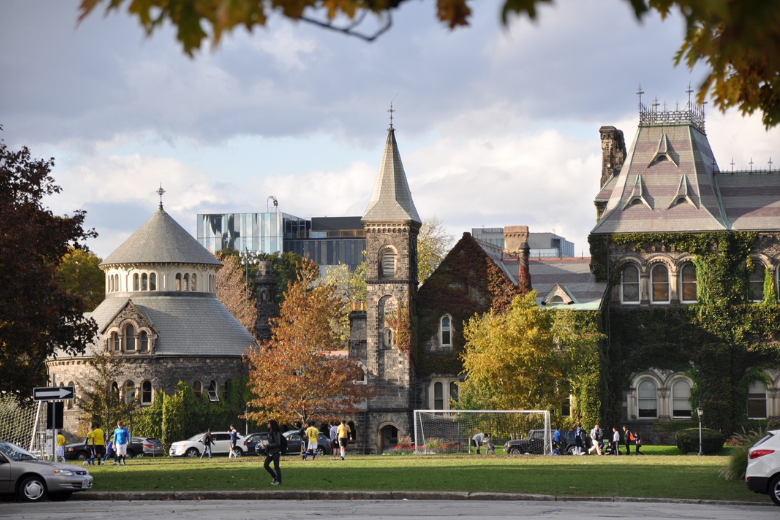
Canada holds a strong global academic reputation, with several of its universities consistently placed among the top tier in world rankings. Institutions such as the University of Toronto, University of British Columbia (UBC),and McGill University are internationally recognised for their research excellence and diverse academic offerings. Canadian degrees are widely respected and compatible with transition to postgraduate programs in the UK, US, and other international education hubs.

Application Process and Entry Requirements
The application process in Canada varies by province. For example, students applying to universities in Ontario use the Ontario Universities’ Application Centre (OUAC) as a first step, before progressing to institution-specific application stages which may include online interviews or additional documentation. Standardised tests such as the SAT or ACT are not mandatory for admission to Canadian universities, however, submitting SAT scores can strengthen an application and provide additional evidence of academic ability.
In French-speaking Quebec, students fluent in French will have an advantage, especially when applying for local residency post-graduation. Applicants to programs taught in English must meet minimum English proficiency requirements through IELTS, TOEFL, or PTE scores.
Immigration Considerations
Canada’s Post-Graduation Work Permit (PGWP) allows graduates of eligible institutions to stay and work in Canada for up to three years after completing their studies. This offers a window for students to gain valuable work experience and apply for Permanent Residency (PR), especially in provinces and professions experiencing skills shortages. Immigration prospects can vary by province and in Quebec, for example, proficiency in French significantly increases residency potential.
Tuition Fees and Scholarships
Annual tuition fees for international students typically range from C$40,000 to C$60,000, depending on the institution and program. Costs are slightly lower compared to the US and many Canadian universities offer merit-based scholarships covering anywhere between 10% and 50% of tuition fees, rewarding strong academic performance and extracurricular involvement.
Accommodation and Living Costs
To obtain a Canadian study visa, students must demonstrate that they have access to at least C$20,635 per year for living expenses. Nevertheless, it is recommended that students from the UAE budget closer to C$25,000 annually, which would cover housing, food, transportation, and other daily expenses.
Universities offer on-campus accommodation, particularly for first-year international students, though off-campus housing options are usually available in nearby districts. Major cities such as Toronto, Vancouver, and Montreal offer various student housing options, though costs can vary significantly by location.
Campus Life
Canada has a long history of welcoming international students, with most universities offering dedicated support services, including international student offices, orientation programs, and multicultural societies. The environment is safe, inclusive, and diverse,making it an easy transition for students from the UAE. Canadian institutions also offer co-op programs, helping students to gain practical experience and build networks in their chosen fields before graduation.

Graduate Career Prospects
There has been a misconception that graduate job prospects in Canada are declining, but in reality, it is skills alignment that is key. The Canadian employment market is still buoyant for graduates of in-demand field subjects such as healthcare, IT and engineering. GCC students aiming to establish a career in Canada should consider these trends and choose programs accordingly.
Graduates who do secure full-time employment in relevant disciplines are well positioned to obtain Permanent Residency, as Canada’s immigration system often favours those with Canadian education and work experience. Many students from the GCC see Canada as a strategic stepping stone to work in the US by earning a degree and gaining residency in North America and transitioning through established mobility agreements.
Ready to Begin?
Interested in exploring Canada as a higher education destination? Connect with UniHawk below: