



































Because Educators Need Support Too
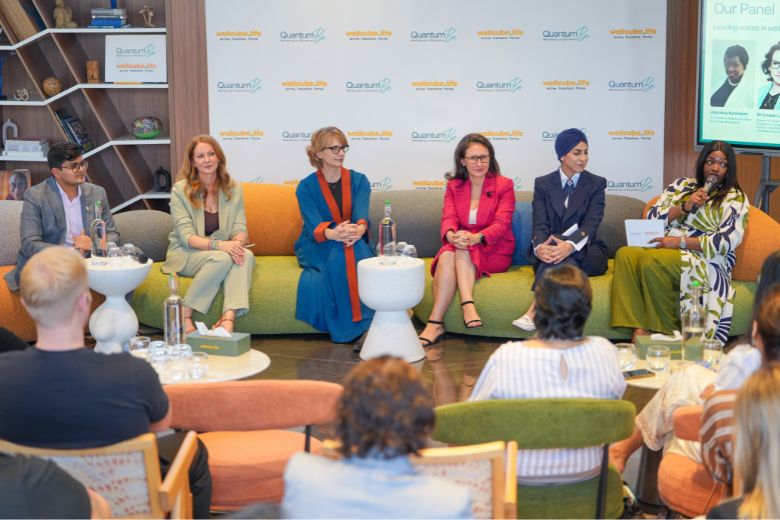
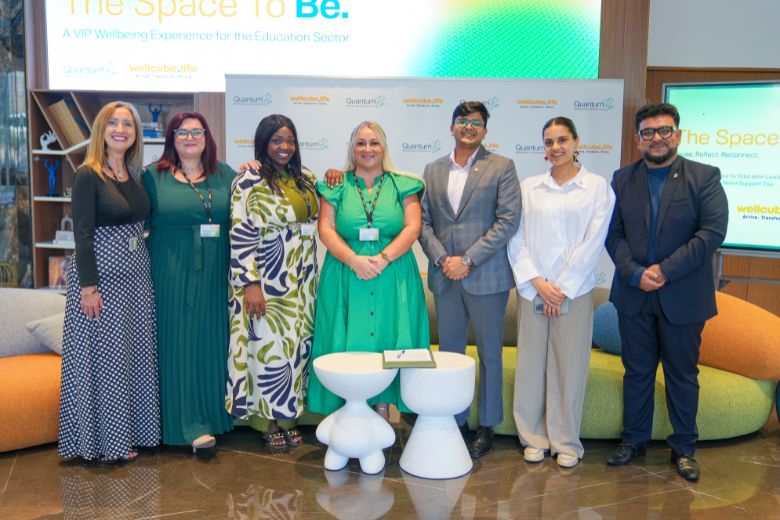
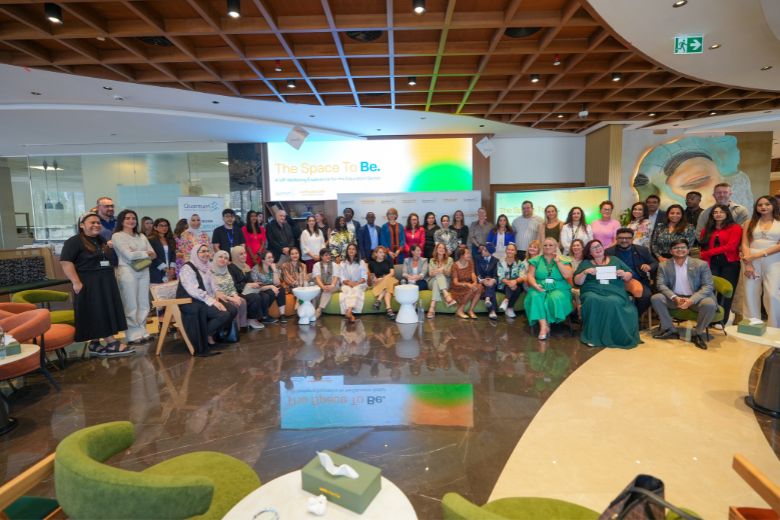
On 24th June, QuantumBe and Wellcube.life brought together over 60 school leaders, positive psychologists, university academics and workplace wellbeing practitioners for an afternoon that went far beyond the usual conversation about self-care.
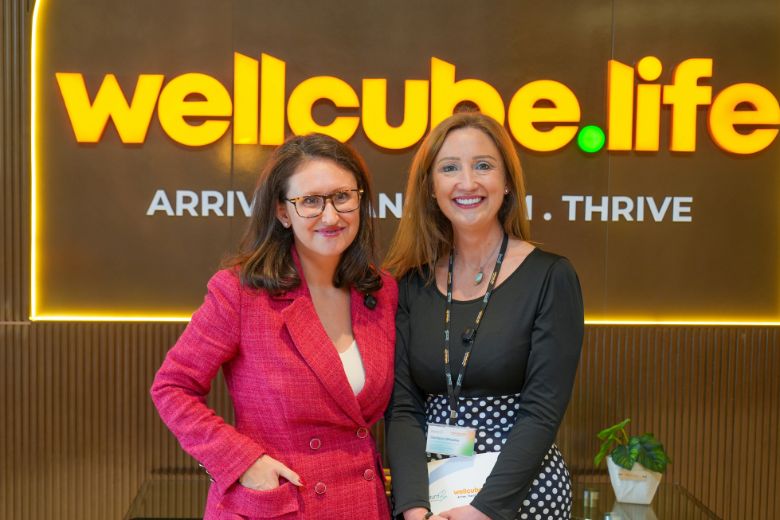
Held at Wellcube.life’s Tranquil Wellness Tower, an integrated wellness ecosystem in the heart of Dubai, the Space To Be created space for honest reflection, meaningful connection and a more human conversation about how educators are supported.
The Conversations
The afternoon opened with a panel discussion that moved quickly beyond surface-level wellbeing.
Speakers explored what it takes to build schools and workplaces where people have the energy, safety and support to thrive. The conversation was honest, practical and deeply human.
What Does a Flourishing Organisation Actually Feel Like?
The panel opened with a question that sounds deceptively simple: what does flourishing look like from the inside? Sparsh R. Jain, Co-Founder and CEO of Wellcube.life, reframed it in a way that set the tone for the entire afternoon.
“Addressing the basic needs of people at work is a thing of the past. It’s now about longevity – about how the day-to-day environment can give you more energy than when you came in. What if someone walked out with better energy than when they arrived?” – Sparsh R. Jain, Co-Founder and CEO, Wellcube.life
It is a deceptively ambitious standard. And yet it is the one Wellcube.life was built to meet. The facility operates across four integrated pillars – living, healing, nourishment and community with the explicit goal of moving people from reactive to proactive. The venue was not incidental to the event. It was its proof of concept. Throughout the afternoon, attendees experienced how Wellcube.life’s integrated model combines preventative healthcare, recovery, movement, nutrition and community to support long-term wellbeing rather than short-term intervention.
For Katrina Mankani, Director of Positive Education at Fortes Education, flourishing at organisational scale requires going back to first principles. With more than a thousand staff across her schools, the question of how to ensure everyone is genuinely supported is not theoretical.
“Staff come to us at different points on Maslow’s hierarchy. We had a survey once where the issue that came up most strongly was that a new building didn’t have enough toilets. That might sound trivial, but because wellbeing conversations were already built into our culture, staff felt safe enough to say it and it got fixed. We don’t have to be bureaucratic and tick boxes. That is how an organisation truly flourishes.” – Katrina Mankani, Director of Positive Education at Fortes Education
The Big Ideas
The panel named the realities often left out of wellbeing conversations.
Leadership pressure. Loneliness at work. Early-career teacher retention. Neurodivergent staff. Psychological safety. The small daily experiences that shape whether people feel supported or unseen.
You Cannot Outyoga a Bad Manager
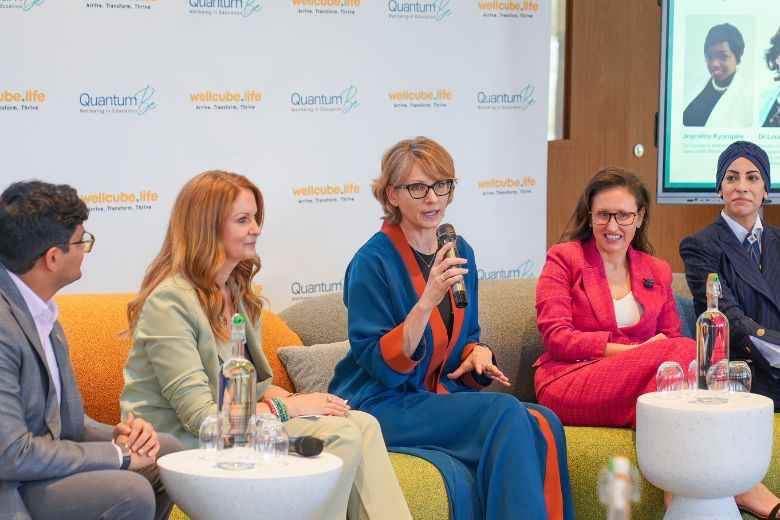
If there was a single line from the afternoon that stopped the room, it came from Dr Louise Lambert, Director of Happiness Policy and Programs at Happiness Matters and Editor of the Middle East Journal of Positive Psychology.
“Managers drive 70% of employee wellbeing and that is equivalent to the influence of a spouse or a parent. You cannot outyoga a bad manager. Flourishing organisations start with looking at the people who lead within them.” – Dr Louise Lambert, Director of Happiness Policy and Programs, Happiness Matters
The implication is significant. For all the investment in wellbeing programmes, mindfulness apps, and away days, the research is unambiguous: the quality of someone’s immediate leadership relationship is the most powerful determinant of how they experience work. Wellbeing is not something individuals do in isolation. It is relational, structural and systemic.
Dr Lambert also raised the issue of loneliness at work – a challenge that is rarely discussed openly in education settings. In the UAE, approximately one in four or one in five people report feeling lonely at work. In a profession that is built around human connection, that figure is striking.
“We don’t measure enough. The new people in an organisation are struggling. The people who have been there forever are also struggling. Measure, measure, measure.”
Wellbeing Is Not a Word for Resilience
One of the sharpest contributions of the afternoon came from Noshaba Anbreen, Assistant Professor of Education at the University of Birmingham Dubai, who challenged the way the sector talks about resilience.
“In education, wellbeing is too often an afterthought – something that comes after learning plans are implemented and after operational decisions are made. We should be judging an educational institution by how they approach wellbeing. The issue with the word ‘resilience’ is that it is reactive. It suggests we are always recovering from something. How about we focus on being sustainable first?” – Noshaba Anbreen, Assistant Professor of Education, University of Birmingham Dubai
This particular reframing of the discussion matters. Resilience, as it is typically deployed in workplace conversations, places the burden of adaptation on the individual. The message, intended or not, is that the system is fixed and people must bend to fit it. Sustainability, by contrast, asks a different question: what conditions need to be in place so that people do not need to recover in the first place?
Anbreen also brought the conversation to early-career teachers – a group whose retention is one of the most urgent challenges in UAE education. Her point was not simply that early-career teachers need mentorship, but that the mentorship needs to be honest enough to let someone say: I am not good at this yet.
“Gen Z teachers genuinely care about their wellbeing and that is not a weakness in the profession. I see myself as a custodian of this profession. I want excellent teachers to stay in it. Retention is not a workplace issue. It is a wellbeing issue.”
Psychological Safety Is Not a Programme. It Is a Daily Practice.
Elizabeth Hewitt, Head of Health and Wellness at Rashid Latifa School, brought the discussion back to the lived experience of staff in schools – environments that can carry enormous hierarchical pressure.
“Do I feel safe to challenge a decision? Do I feel safe to speak up? These are not small questions, especially in schools where the hierarchy can be significant. How you are communicated with, how you are spoken to – all of this shapes whether someone feels they belong. Wellness is not just an individual’s responsibility. It is structural.” – Elizabeth Hewitt, Head of Health and Wellness, Rashid Latifa School
Hewitt also raised the frequently overlooked issue of neurodivergent staff – noting that schools invest considerable energy in inclusion for students, while the same consideration is rarely extended systematically to the adults in the building.
Her closing point on practical sustainability was equally direct: protect time and energy. Give people the conditions to switch off. Build belonging. Make trust something people feel in the day-to-day, not just something stated in a policy document.
Beyond The Conversations
After the panel, guests moved from discussion into experience. Guests chose between two parallel breakout sessions: one led by Dr Vas, Medical Director on positive mental health through the gut-brain axis, and another – Developing the HERO Within, facilitated by QuantumBe’s Deniece Wheeler and Joyceloy Kyompire, drawing on the framework of Psychological Capital and its four components: Hope, Efficacy, Resilience and Optimism.
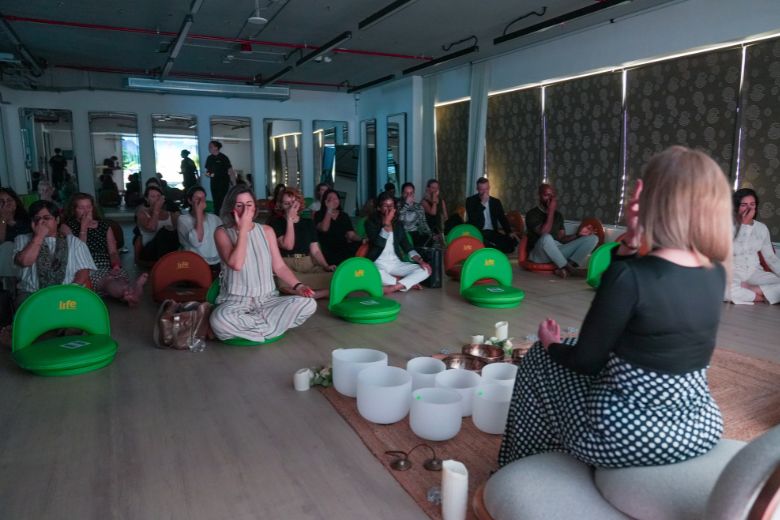
A second session, Release and Create, brought the whole group together for guided gentle movement, breathwork and meditation led by Deniece Wheeler and Jane Elizabeth. Then came something that felt genuinely rare in the context of a professional education event: a guided tour of Wellcube.life’s facilities, allowing attendees to experience first-hand what a truly integrated wellness environment looks and feels like.

The Commitments That Stayed in the Room
The panel closed by asking each speaker to name one commitment they would like every leader in the room to carry into the coming academic year. The answers were practical, personal and, in some cases, quietly radical.
Dr Louise Lambert called for more humour. Not as a distraction from the weight of the work, but as a deliberate act of leadership.
“The job of wellbeing can get heavy and start to feel like just another job. Humour does everything. Have more fun. Focus a little less on feeling bad.” – Dr Louise Lambert
Katrina Mankani asked leaders to remember why they entered the profession, and to make that reason visible to the people around them.
“Every person around you is looking for the same answer: will these people be with me on this journey? Enjoy the journey while you’re on the way to the destination.” – Katrina Mankani
Noshaba Anbreen asked for something specific and immediately actionable: an offline day.
“Prioritise digital wellbeing. We do not always need AI or devices in our classrooms. How we use technology ourselves sets the standard for everyone around us.” – Noshaba Anbreen
And Sparsh Jain offered a frame that felt like it belonged not just in education but in any high-pressure environment: the practice of knowing when to zoom out.
“The right balance of knowing when to zoom out and when to zoom in really helps. When we’re in the right headspace, we can build new habits. But when the body gets tired, we need to let go for a bit. Busy days belong to everyone but as long as you maintain that balance of zooming in and zooming out, you can face the next day with a lot more energy.” – Sparsh R. Jain
What This Event Was Really About
Events about wellbeing in education are not uncommon. What made The Space To Be different was the honesty and energy in the room. School leaders connected. Guests asked direct questions. Conversations continued between sessions, during tours and over refreshments.
This was not passive attendance. It was a community gathering around a shared need.
About QuantumBe
QuantumBe is a wellbeing in education organisation supporting individuals, teams and organisations to flourish through evidence-informed approaches rooted in education, positive psychology, coaching and holistic wellbeing. Visit
About Wellcube.life
Wellcube.life is the world’s first integrated urban wellness ecosystem, located at Tranquil Wellness Tower, Jumeirah Village Triangle, Dubai. DHA-licensed and science-backed, combining clinical diagnostics, precision nutrition, recovery therapies, hospitality and community. Visit