






































A Global Classification System Promoting Transparency in Research and Content Creation
Dubai has introduced the world’s first Human–Machine Collaboration (HMC) Icon System, an innovative framework developed by the Dubai Future Foundation. The system offers a clear way to identify the role of human and machine input in creating research, publications, and intellectual content. Approved by His Highness Sheikh Hamdan bin Mohammed bin Rashid Al Maktoum, Crown Prince of Dubai and Chairman of the Board of Trustees of Dubai Future Foundation, this new classification tool is designed to reshape how knowledge is produced and understood in today’s digital world.
A Vision Rooted in the Future: From Turing to Transparency
“What if we had a Turing declaration for human intelligence?”
This provocative question was posed as Opportunity 41 in the 2024 edition of The Global 50 report, addressing the emerging post-Turing era — a time when machine language and intelligence are becoming indistinguishable from human thought and expression.
In response, and in recognition of the nuanced nature of human–machine collaboration, the Dubai Future Foundation has introduced the Human–Machine Collaboration Icon System. This framework provides a visual classification that allows researchers, designers, and publishers to clearly indicate how and where machines contributed to the development of their work.
A Commitment to Transparent Content Creation
With digital tools becoming increasingly integrated into academic, creative, and professional fields, understanding who or what contributed to a final output has become essential.
“Distinguishing between human creativity and artificial intelligence has become a real challenge in light of today’s rapid technological advances. This calls for a new approach to recognise the growing role of intelligent machines.” said His Highness Sheikh Hamdan. “That’s why we launched the Human–Machine Collaboration Icons, to bring transparency to how research, publications, and content are created.”
His Highness encouraged writers, researchers, publishers, designers, and content creators globally to use the system with responsibility and integrity. All Dubai Government entities have also been directed to incorporate the system in their research and content development activities.
What Is the Human–Machine Collaboration Icon System?
The HMC classification system provides a visual method to show the level and type of input from intelligent machines in the creation of content. These technologies may include algorithms, automation software, content generation tools, and other digital systems used in research, writing, or production.
The purpose of the system is to help content creators disclose how their work was developed, supporting greater trust and clarity for readers, educators, and decision-makers.
Five Levels of Human–Machine Collaboration
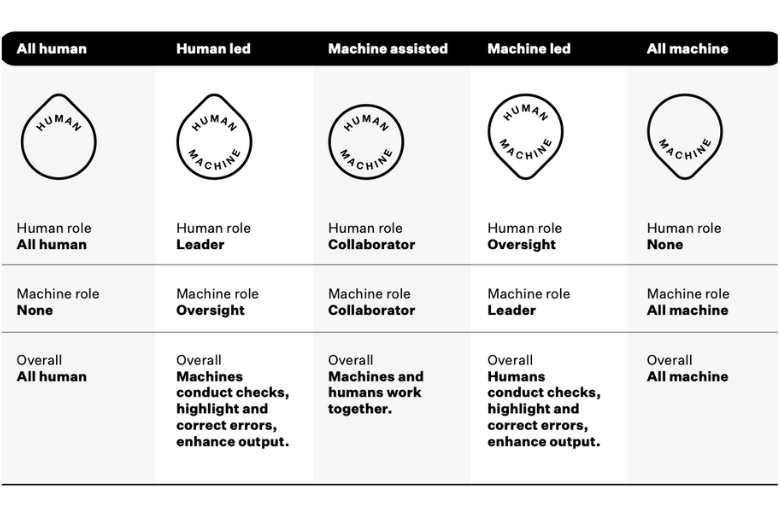
The system features five core icons to represent the degree of machine involvement:
- All Human – Content created entirely by a human, with no machine input.
- Human Led – Human-driven work enhanced by AI or digital tools for accuracy or improvement.
- Machine Assisted – Humans and machines collaborate iteratively throughout the process.
- Machine Led – Machine plays the leading role; humans validate and refine the output.
- All Machine – Content is fully generated by an intelligent machine, with no human intervention.
Nine Functional Icons by Process Stage
To provide further clarity, the HMC system also includes nine functional icons that show where in the process human–machine collaboration occurred:
- Ideation
- Literature review
- Data collection
- Data analysis
- Data interpretation
- Writing
- Translation
- Visuals
- Design
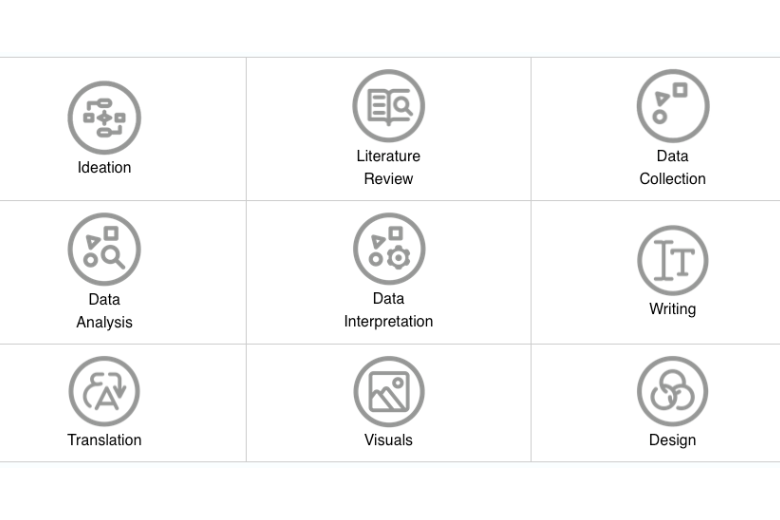
These icons are adaptable across sectors and media formats, including video and images. While the system does not assign specific percentages to machine involvement, it empowers creators to openly disclose AI usage, fostering trust and clarity.
A Flexible Framework for the AI Era
As AI tools become more embedded in education, publishing, and research, the HMC Icon System offers a globally applicable standard that can be adopted across institutions, industries, and content platforms.
To learn more or download the full classification system, visit The Dubai Future Foundation website: