






































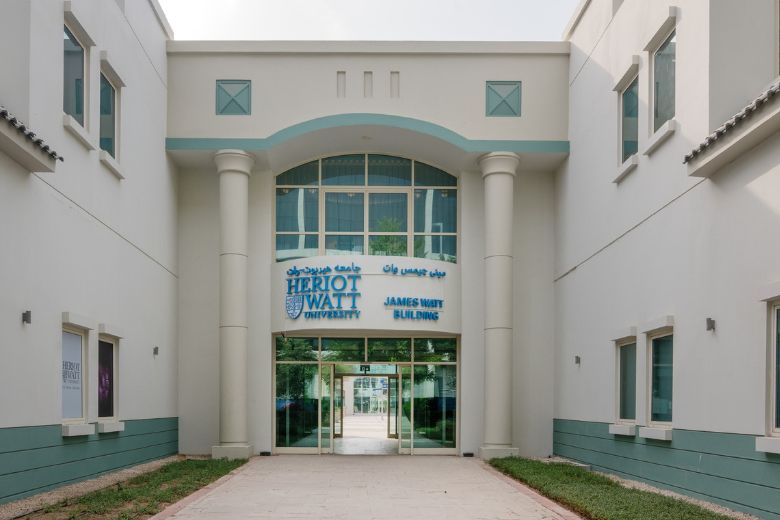
Heriot-Watt University Dubai recently unveiled its newest landmark, the James Watt Building, a future-facing campus space designed to transform the student experience. More than 18 months in the making and created with direct input from students and staff, the building reflects the university’s bold vision for learning, innovation, and community.
Developed in partnership with JLL, the project goes far beyond bricks and mortar. Every element has been designed to inspire – from the 200-seat auditorium equipped for world-class events, to flexible classrooms where furniture and layouts can be completely reconfigured, down to the carpet. Breakout zones, collaborative hubs, and a new student hangout space ensure the building supports both study and social life.
Sustainability has also been at the heart of the project, with the campus achieving LEED Gold certification. This reflects Heriot-Watt’s commitment not only to academic excellence but also to meeting the UAE’s sustainability goals. In every way, the James Watt Building sets a new benchmark for higher education in Dubai – a place that mirrors the future workplaces students will enter, while creating authentic experiences and lasting memories.
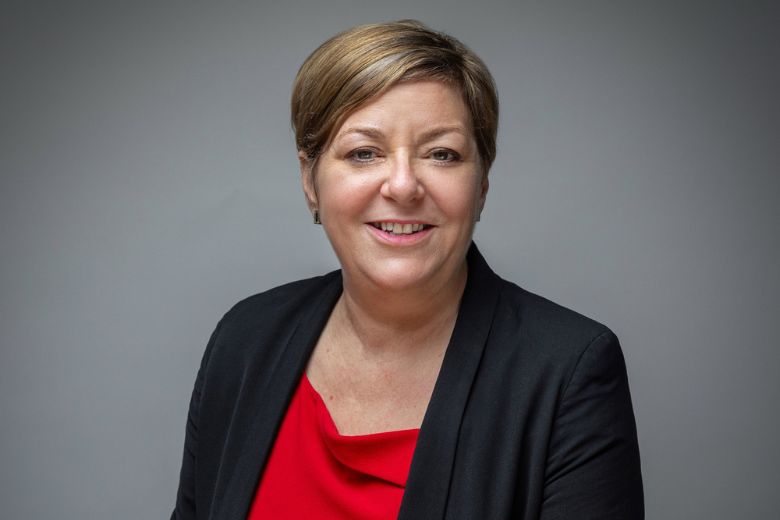
In this exclusive interview with Education UAE, Vanessa Northway, Deputy Vice Principal – Learning & Teaching and Student Experience at HWUD, shares how the James Watt Building came to life, why it matters, and what it means for the university’s next chapter.
Watch the full interview below:
Heriot-Watt University Dubai has completed 20 years in the UAE. Looking back, what stands out as the biggest milestone?
Vanessa: There have been many, but the new James Watt building is a particular highlight. It reflects how far we have come in the last decade. When I first arrived 16 years ago, we were operating from a much smaller space, and this is now the fifth campus I have worked in. The growth has been incredible, not only for colleagues but also for our students and graduates who form part of a wider global community.
How do you maintain a strong Heriot-Watt identity across different campuses, while also ensuring that the Dubai campus retains its local culture and priorities?
Vanessa: Our core values – Inspire, Belong, Collaborate, Celebrate – guide everything we do, inside and outside the classroom. We are a global university with campuses in the UK, Malaysia, and Dubai, but we make sure students feel part of one community wherever they are. Each campus has its own identity, yet that shared sense of belonging unites us.
The James Watt building is an impressive addition at Dubai Knowledge Park. Can you highlight some of the most exciting features?
Vanessa: We have a 220-seater fantastic auditorium, which is used for students to study within, but also for commercial activities. So if we want to hold conferences, for example, we now have a purpose-built space for that particular activity. It has a green room attached to it and is equipped with extensive technology that integrates the lighting and sound. So it’s like a professional production organisation. Staff and students can utilise that to its full potential.
Other areas of this building include the extra space for students, particularly in terms of their recreational activities, as students mustn’t be just here to study. They also need some time to liaise with each other, hold their meetings, and build their own communities while living here.
The James Watt building reflects the core essence of our original main building, but it’s also about lessons learned and what we did in the old building that we can improve on for the sake of students and staff here. So, it’s more collegiate and holistic as we move through the building.
In what ways do these new developments reflect Heriot-Watt’s role in advancing higher education in the UAE?
Vanessa: I think it helps in terms of showcasing what we can do inside and outside the classroom, but I think it also puts a stand forward that we are not prepared to take anything less than the best for our students. The community in which they thrive, in which they live, and in which they study should be of the highest value and the highest quality.
If you wander in the corridors of our main campus, you’ll see reflections of Old Edinburgh and New Edinburgh. And as you now come across the James Watt building, some of those key areas have been reflected. However, it’s about really focusing on the key stakeholders, which are the community and the body of students that we work for and serve.
Can you tell us about the growth that HWUD has seen over the years?
Twenty years ago, we had just 120 students, and the campus was a very different place. Today, our student population has grown to over 5,000 students. That’s across undergraduate, postgraduate, and our PGR community. We’ve grown exponentially. There is also significant potential for growth. We anticipate the numbers moving up to around 6,000 within the next 2 to 3 years.
Each and every classroom has been designed specifically for different needs, and it’s not just about numbers. It’s about the actual activities that take place. We have digital pods, recording studios, and innovative rooms designed for various pedagogies and curricula.
I would like to see more nationalities come, even though we have just shy of 160 nationalities in our student body. And in terms of our staff population, we have just shy of 60 different nationalities. So, I would like to see even more come. I would like to see the students learning from each other, if possible, from different cultures and nationalities across these two buildings.
AI, data, and sustainability are global priorities. How is HWUD adapting its curriculum to these trends?
Vanessa: AI is experiencing unprecedented growth. Just two years ago, few of us knew what ChatGPT was and today, we have dedicated programmes focused entirely on artificial intelligence. The field is evolving rapidly, shaped by global trends as well as strong regional influences, particularly in emerging areas such as fintech.
Looking ahead to 2033, the UAE’s forward-thinking vision will not only attract greater numbers of people to the country but also emphasise the importance of ensuring that students and graduates are equipped with the skills needed for the workplaces of the future. While we may not have a crystal ball, we can forecast, study trends, and anticipate the competencies that will be essential in the years to come.
At Heriot-Watt, continuous reflection and adaptation are integral to our culture. After each semester and academic year, we review our programmes in light of industry shifts and global developments, ensuring we nurture both our student community and the evolving curriculum that supports their success.
Looking ahead, what excites you the most about the James Watt Building?
Vanessa: I think it’s just an amazing atmosphere to be in, and I feel homesick when I’m away from this particular campus. I don’t like being away from it for too long. It’s just a fantastic place to work.
And we’re in Dubai. Students and parents do expect a certain level and quality of the building and the atmosphere in which the kids are being taught. And I think that when you walk through the doors here, I personally feel at home. I don’t want to work in a different environment. This is where I want to be.
And I’m sure that’s the same kind of feeling that prospective students get with their parents as they walk through. It’s not just a beautiful building. It’s an extremely well-considered building. It’s high quality and it’s looking forward to the future to make sure that students can grow within this building.
Earlier this year, all undergraduate and postgraduate programmes at HWUD secured initial accreditation from the UAE Ministry of Higher Education. What does this mean for families comparing options in Dubai?
Vanessa: We went through two and a half to three years of going through the accreditation. I lived and breathed it for quite some time with a big group of colleagues. We had to look at every single course within a programme.
We originally started with 90-plus programmes. We now have 72 that are all accredited. As we’ve gone through the accreditation process, there were many ways in which this is of value to students. Firstly, it helps us with research. A CAA-approved university has more access to research and more partnerships across the UAE, the MENA and the Gulf region.
However, it also helps to ensure that students understand that when they receive their degree, it isn’t just a degree that says ‘Heriot-Watt’ – it is a Heriot-Watt degree that can be taken overseas or back to their home countries with confidence, knowing MOHRE and the CAA have approved it.
Many families in Dubai value international exposure. How does the Go Global programme work?
Vanessa: We currently have about 250 to 300 students a year on the Go Global programme. They can move between Edinburgh to Dubai, Dubai to Malaysia, Malaysia to Edinburgh. About 40 students come here to Dubai, and Edinburgh probably sees 150 to 200 a year that go through.
Students can decide in their first semester that they want to go for just one semester. They can decide to go for the whole year or make a permanent transfer. In theory, as long as the programme runs across our three campuses, they can do a year in Edinburgh, a year in Dubai, and a year in Malaysia.
It’s a seamless transition because everything taught in other campuses is also taught here. The global teaching team develops the course materials. So students can be confident that wherever they are, it’s the same education.
What support can a first-year student expect in their very first week?
Vanessa: The first week is Welcome Week. They meet all their academic team, and every student is allocated a personal tutor who stays with them all the way through – from undergrad into postgrad, and even at PhD level.
Your personal tutor is available to discuss anything pastoral, not just academic matters. We also have a very active student council, about 15 to 20 members, who help with events, clubs and societies. That’s how students build their own community and make friends.
We also have an excellent well-being service, a careers team, and support from our alumni office when students graduate. Each stage has a support stream in place.
If you could encourage every new student to adopt one learning habit in their first month, what would it be?
Vanessa: Go to class. Ask your questions within the classroom itself. Don’t wait until you’re outside and then you can’t remember what you were going to ask the teacher. Grab them after the class.
It’s too late near the end of the semester if those questions haven’t been asked. There’s no such thing as a silly question. And often, others in the room are thinking the same thing.
I’d also suggest that students really engage outside of the classroom with other students, because that’s how they build that support network.
Can you share a recent student story that captures the campus spirit?
Vanessa: I’ve had the privilege of teaching some students who are also our staff members, which is wonderful because I get to be their teacher and their colleague. Some have come in absolutely terrified because I’m their teacher and they’ve known me for years, but then we embark on a dissertation journey together.
It’s a privilege to see how they take what they learn and apply it in their working life. Those are really high-level success stories for me, because I can actually see the impact every day.
You have been part of HWUD for 16 years. What moments have stood out the most?
Vanessa: COP28 was truly extraordinary. We had the honour of hosting His Highness King Charles on our campus, and what began as a small fringe event quickly evolved into something remarkable. Over the course of two weeks, we welcomed more than 3,500 visitors, including industry leaders, educators, and global partners.
We also brought together 20 industry partners for a Future Skills exhibition, where our students had the opportunity to engage and learn from these experts freely. It was, without a doubt, one of the most defining and rewarding periods for us as a community of colleagues, a true reflection of collaboration, innovation, and impact.
Finally, if you had to describe the next chapter of HWUD in three words?
Vanessa: Another new building.
To find out more about Heriot-Watt University Dubai,
Further Reading:
- Heriot-Watt University Dubai Granted Accreditation for All Undergraduate and Postgraduate Programmes by the UAE’s Ministry of Higher Education and Scientific Research
- Heriot Watt University Dubai Showcases Trailblazing Student Designs at The Degree Show 2025