






































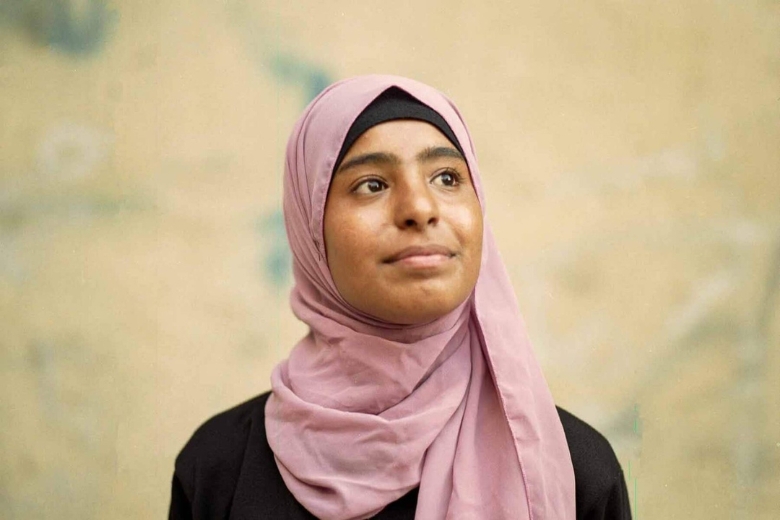
New Pathway Aims to Help Refugees and Displaced Young People Access University, Training and Skilled Employment
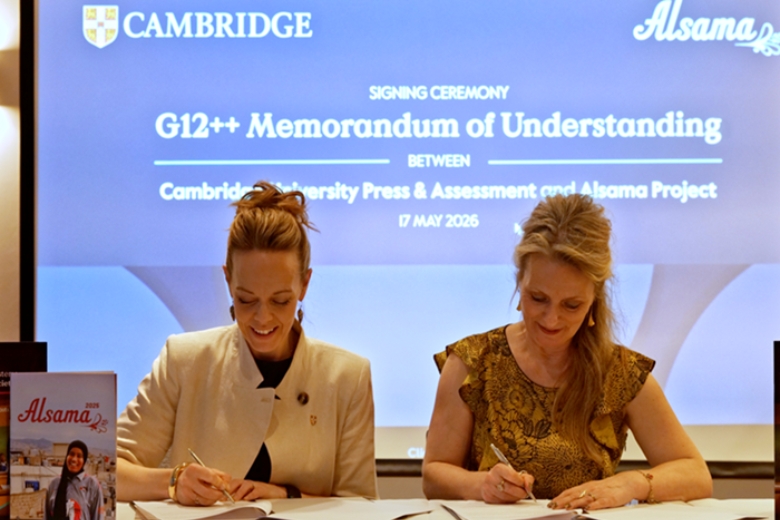
The Cambridge University Press & Assessment and NGO Alsama Project recently signed an agreement to collaborate on a new school-leaver qualification designed for refugees and displaced young people.
The new G12++ qualification has been developed to support learners whose education has been disrupted by conflict, displacement or exclusion from formal schooling. It aims to provide a recognised pathway into higher education, vocational training and employment, giving young people a way to prove what they know and what they are capable of.
The agreement was signed during the Education World Forum, in the presence of senior representatives from UNESCO and the UK Foreign, Commonwealth and Development Office.
Cambridge and Alsama Project are now looking to engage with funders, policymakers, universities, employers and other partners, including in the UAE, to help scale the qualification across the Middle East and worldwide.
For the UAE, the initiative carries particular relevance. The country and its philanthropic organisations have a long tradition of supporting global education, humanitarian work and refugee communities across the region. Cambridge and Alsama Project hope to build on that legacy by working with UAE-based partners who can help expand the reach and recognition of G12++.
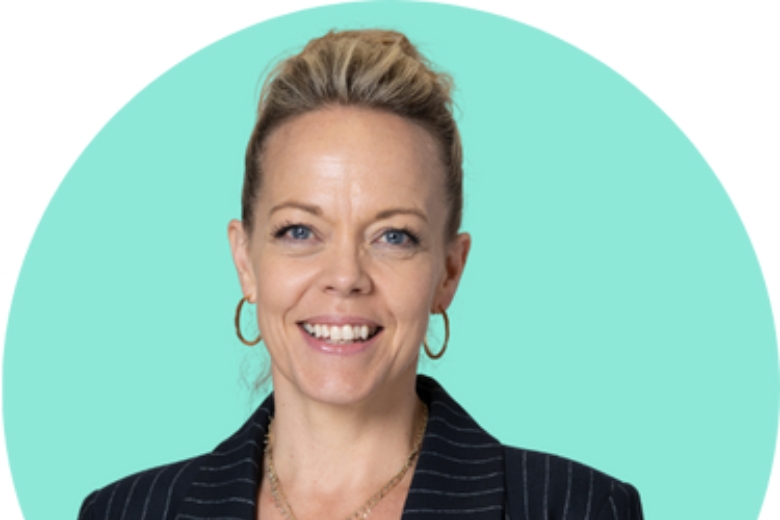
As Jane Mann, Managing Director, Partnership for Education, Cambridge, explains, education is often one of the first casualties in times of conflict.
“The global education crisis caused by forced displacement will only grow as climate change and conflict uproot more young people. Millions of displaced young people are not locked out of education because they lack ability. Too often, they are locked out because they lack proof.”
Tackling a Global Education Gap
The need for new education pathways is urgent. UNHCR data shows that there are 117.3 million forcibly displaced people worldwide, including 49 million displaced children.

Only 9% of refugees around the world attend higher education, compared with an average of 42% among the global population
For many displaced young people, the barrier is not ambition, intelligence or effort. It is the absence of formal documentation. Without a recognised high school certificate, students can be excluded from universities, vocational programmes and skilled employment, even when they have the ability to succeed. Mann says,
“When young people are forced to leave school and flee, it’s not only their past they leave behind, but their future too. Working with Alsama Project, we will help them take back their futures through a new global qualification that will open pathways to universities, vocational programmes and employment.”
She adds that displaced youth in the Middle East and across the globe need models that reflect their realities, while the world needs their talents.
The G12++ qualification has been designed to address this gap.
Alsama Project, an NGO based in Shatila refugee camp in Beirut, Lebanon, established G12++ after working with teenagers outside formal schooling. Originally inspired by Alsama students themselves, the qualification offers an alternative to traditional secondary school exit exams for learners whose education has been interrupted.
Rather than being tied to one curriculum, G12++ is curriculum agnostic. It aims to reflect international standards while remaining relevant to the realities of displaced learners. The qualification assesses capability, critical thinking, soft skills and potential, rather than simply testing a student’s ability to recite content.
Meike Ziervogel, Co-Founder and CEO of Alsama Project, says the partnership with Cambridge is significant not only for Alsama’s students, but for “the millions of displaced youth worldwide who have been told that their education doesn’t count because it happened outside a formal system.”
A Qualification Built for Real Lives
Over the past two years, Cambridge has worked with Alsama Project to strengthen the assessment approach and support exam development. This work draws on Cambridge’s experience in delivering assessments to more than 8 million learners each year in over 170 countries.
For Ziervogel, Cambridge’s involvement sends an important message. She says,
“Cambridge has spent over 160 years defining what rigorous, credible assessment looks like. Their involvement sends a clear signal that a qualification built inside a refugee camp can demonstrate a level of academic rigour that meets global benchmarks, opening doors for students who have survived war and displacement.”
The G12++ gives displaced learners a way to validate their education, even when that education happened outside a formal system.
Alsama Project launched the first G12++ examination in February 2026 in Shatila refugee camp. Several students who had arrived in the camps unable to read or do basic maths have now attained the qualification after completing a rigorous assessed programme.
For these students, the credential is more than a certificate. It is evidence of learning, persistence and potential. It can help them access universities, vocational training and employment opportunities that may otherwise have remained out of reach. She says,
“The barrier has never been ability. What has been missing is recognition. The G12++ exists to change that, and Cambridge’s partnership is what makes that argument impossible to ignore.”
Opening Doors to Higher Education and Work
For refugee students such as Wissal Al-Jaber, that recognition can be life changing.
Wissal fled Syria to Lebanon at the age of nine after spending a year imprisoned by Islamic State with her family. Her education has been repeatedly interrupted, yet her ambition has remained intact.
“I have survived war more than once. Each time, I told myself, hold on to your education, because war may threaten your present, but education will protect your future.”
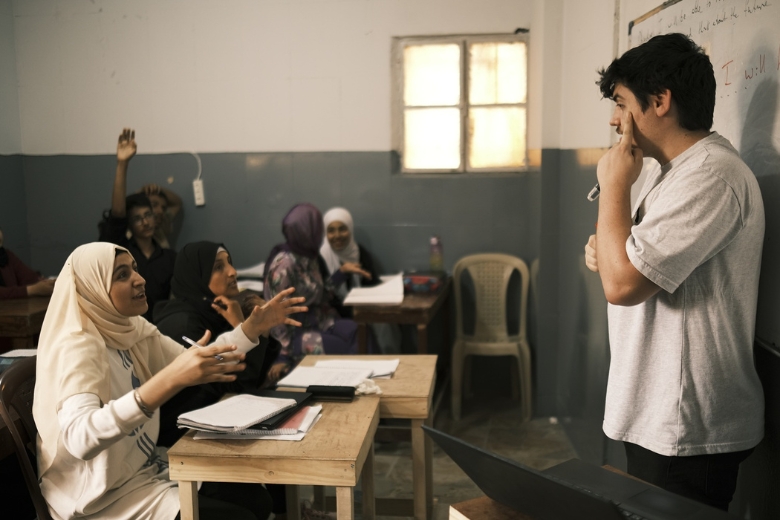
For Wissal, the G12++ represents a chance to be seen for her ability, not defined by the disruption she has faced.
“I have not had the opportunity to complete a full education, but I deserve the same future opportunities as those who have. The G12++ gives me that. It is exactly what I need to show the world what I am capable of, and to finally follow the dream that grew inside me for years. I want to study psychology, to build a future where my story becomes my strength.”
Patrick Derham, G12++ Advisor and Former Headmaster of Westminster School, believes the qualification could help tackle one of the most persistent injustices in education. He says,
“In both my personal experience and my work in education, I continuously see firsthand the unjust barriers that disadvantaged youth across the world face. While the solution is multi-faceted, the G12++ offers a critical part of it, an internationally-recognised qualification that is curriculum-agnostic.”
By creating a credible route to higher education and employment, Derham says the qualification can support young people who are currently excluded despite their drive and talent.
“Through this qualification, we can provide a pathway to higher education and employment for many who are currently excluded, unlocking the incredible potential of so many to benefit the world.”
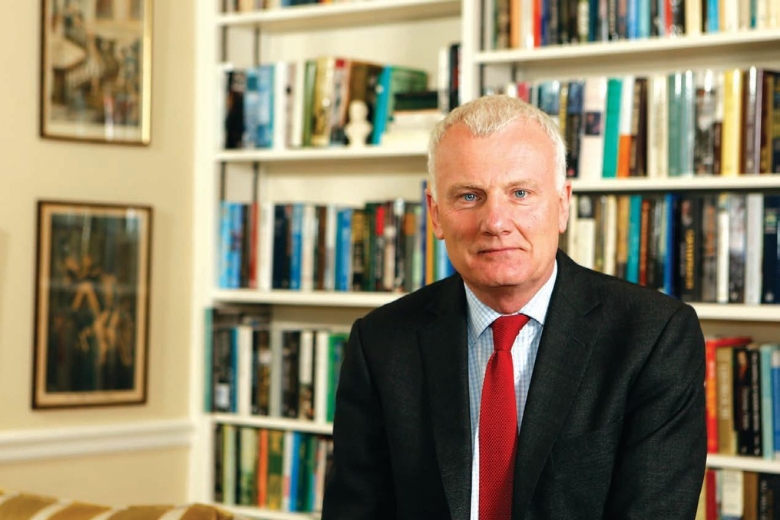
Patrick Derham, G12++ Advisor and Former Headmaster of Westminster School says,
“Of all the projects that I have been involved with, this is the one that has the potential to make the greatest difference”
For the Middle East, where education, humanitarian support and youth opportunity are closely connected, the G12++ represents a powerful new model. It recognises that displaced young people do not need lowered expectations. They need credible pathways, trusted assessment and partners willing to open doors.
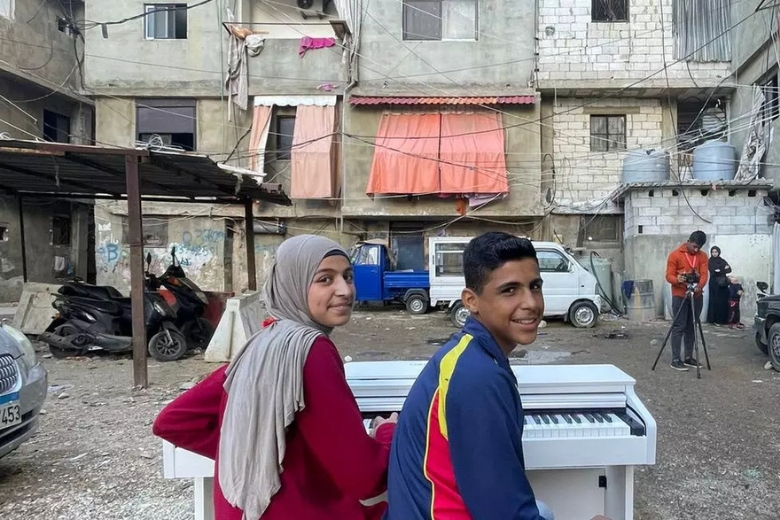
The first G12++ graduates will enter University, TVET and employment in 2026
For more information please visit
Further Reading
- Introducing The School Spotlight Series, Brought to You by Education UAE
- British Orchard Nursery Launches AI Academy as It Celebrates 20 Years With Gradutaion of 1500+ Children