







































In February 2025, the Abu Dhabi Department of Education and Knowledge (ADEK) launched the Wellbeing Mark, a recognition programme that puts student and staff wellbeing front and centre — not as an add-on, but as a core indicator of school quality.
Set to roll out across all private and charter schools in Abu Dhabi from the 2025–26 academic year, the programme marks a turning point in how school performance is evaluated — going far beyond academics to acknowledge the importance of emotional, mental, and physical wellbeing.
“This isn’t just another label. It’s a game-changer for how we think about education.”
What Is the Wellbeing Mark?
The Wellbeing Mark is a transparent, measurable framework designed to help parents, educators, and communities understand how seriously schools take mental, emotional, and physical wellbeing. It’s not about ticking boxes — it’s about changing school culture for good.
For the first time, parents will have a clear, standardised indicator showing whether their child’s school supports student and teacher wellbeing in a meaningful way.
Built on SPIRE: A Framework That Covers the Whole Child
ADEK’s Wellbeing Mark is structured around the SPIRE framework, which recognises five dimensions of wellbeing:
- Self-empowerment
- Physical
- Intellectual
- Relational
- Emotional
Each dimension is supported by three measurable elements, allowing schools to take a structured yet flexible approach to embedding wellbeing in everyday life.
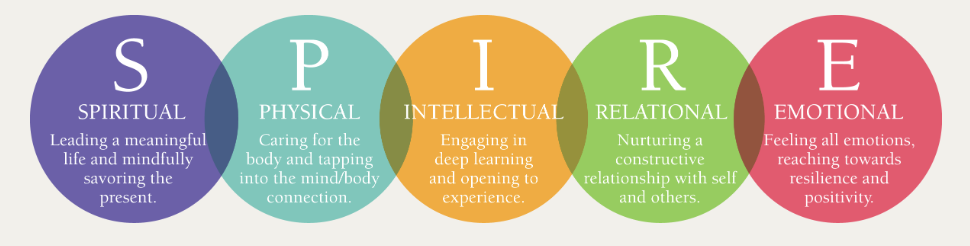
Piloting the Programme in 64 Schools
In the 2024–25 academic year, 64 schools (including 47 private and 17 charter) are participating in the pilot phase. This allows ADEK to refine its evaluation methods, ensure fairness across diverse school types, and introduce clear validation criteria before full implementation.
Why This Matters: Real Impact on Students and Teachers
Research shows that wellbeing in schools isn’t just a “nice to have” — it’s a prerequisite for academic success. When students feel safe, supported, and empowered, they perform better, build resilience, and engage more deeply with learning.
For teachers, schools that prioritise wellbeing report higher job satisfaction, lower burnout, and more meaningful classroom relationships.
“A great education isn’t just about high grades — it’s about growing up in a school that prioritises the whole child.”

More Than a Programme: A Policy Shift Across Abu Dhabi
The Wellbeing Mark is part of a broader, systemic shift in how ADEK approaches education.
In September 2024, ADEK released its School Wellbeing Policy (Version 1.1), providing a clear roadmap for embedding wellbeing into all areas of school life. The policy is being phased in during the 2024–25 academic year, with full compliance required by 2025–26.
Summary by Year
| Academic Year | Key Wellbeing Initiative |
| 2024–25 | Launch of the School Wellbeing Policy and Staff Wellbeing Policy; annual wellbeing surveys begin. |
| 2025–26 | Full roll-out of the Wellbeing Mark, integrated into school plaques for public accountability. |
This whole-school approach addresses:
- Psychological & emotional health
- Physical & social wellbeing
- Digital & environmental factors
- Intellectual growth and support systems
Schools are now required to conduct annual wellbeing surveys for both students and staff, making wellbeing a core part of continuous improvement.
At the same time, a parallel Staff Wellbeing Policy was introduced — acknowledging that educator wellbeing is just as essential to school success.
What Comes Next?
As the Wellbeing Mark prepares for full-scale rollout, it signals a powerful shift: from policy to lived experience, from grades to growth, and from isolated efforts to whole-school wellbeing ecosystems.
With ADEK leading the way, the UAE is setting a new global standard for what quality education truly means.
For full policy documents, visit the website below:
Further Reading:
- New MoHESR-ADEK Pact to Streamline School-to-University Pathways
- MoHESR and EGA Partner to Boost Engineering Scholarships for Emirati Students
- New ADEK Policy Mandates 240 Minutes of Arabic Weekly in Kindergartens
- Global and Local Experts Unite at the ADEK Counselors Forum to Strengthen Student Career & University Guidance Across Abu Dhabi