






































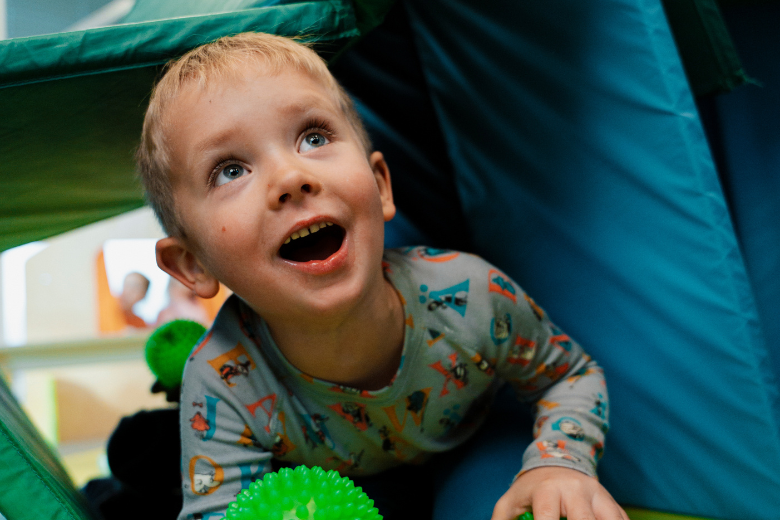
The early years of a child’s life are most significant in nurturing curiosity, building social relationships, and cultivating lifelong habits. During this time, children tend to gather information from their surroundings, shaping how they see the world around them, and behave and interact in it.
Today, learning has become digitised to an extent that it has penetrated the early childhood phase and how young children are taught and raised. While screens, the Internet, and Artificial Intelligence (AI) have revolutionised access to information and methods of learning, we are slowly beginning to see the cons of its excessive use, particularly in early learning settings. Tech immersion can hamper relationship building, real-world connections, and traditional forms of hands-on learning that help children thrive. While technology has its advantages, ensuring a tech-free early learning environment is increasingly gaining prominence to rebuild deeper connections with knowledge and real people.
Why Does Tech-free Learning Matter for Young Children?
You may have heard of the term ‘holistic development’ for toddlers and preschoolers. This means a well-rounded learning environment that includes academic development, physical development, social-emotional learning, play-based learning, and nature exploration. The learning menu resembles a well-fitted jigsaw puzzle with each piece supporting a child’s growth into a confident, capable, and empathetic individual.
Providing a tech-free space helps children engage in activities that stimulate their senses, connect them to emotions, and fire their creativity. For instance, participating in storytelling, group activities, outdoor games, arts, and crafts helps them connect concepts to experiences, creating vivid memories of play-based learning and joyful memories.
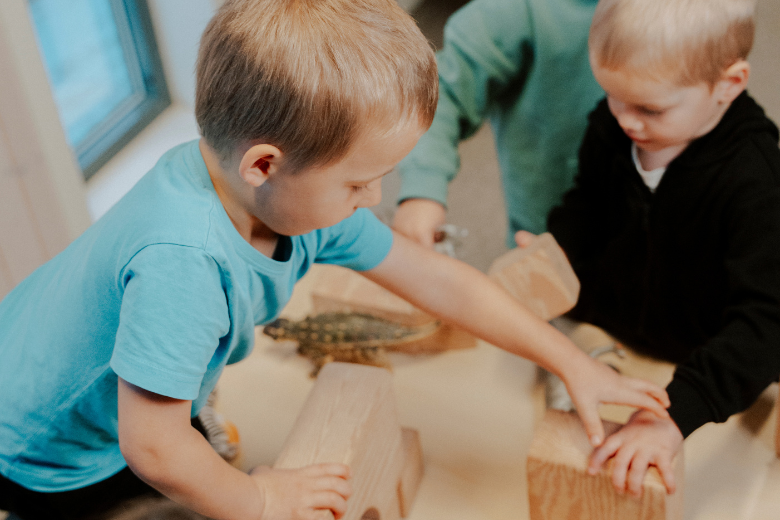
By contrast, screen-based learning offers fast, ready-made answers. And it can be used as a great supplementary tool to reinforce concepts. However, it discourages essential values such as patience, critical thinking, and hands-on learning. For example, if children are shown how blocks are built on a screen instead of handing them blocks to build themselves, they might see colorful images of how blocks are being stacked. But they miss developing the skills of balancing, designing, and problem-solving while actually doing the task. This is also a fitting example of how screen-based learning can serve as inspiration rather than being the primary tool for learning and growing.
Opening Minds Beyond Screens
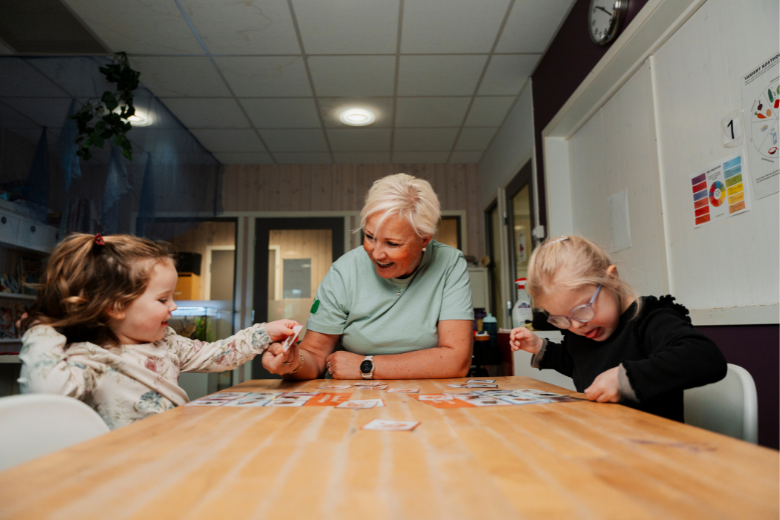
In tech-free environments, children are exposed to a wide variety of learning formats, which may include music, conversations, puzzles, imaginative play, role play, art, and more. This variety allows choice of format based on concept, enriching their understanding and paving way for exploration. The same depth in learning cannot always be replicated through digital shortcuts.
The instant gratification of digital answers discourages asking questions, checking multiple sources of information, experimenting, and even making mistakes. Limiting tech use lets children enjoy the process of learning, questioning, and embracing mistakes rather than just focusing on the outcomes. This is the first step towards cultivating a lifelong love for learning.
Books: A Timeless Gateway to Knowledge
Long before the advent of the internet, search engines, and AI, books were the primary source of information that connected generations to wisdom, culture, and imagination. Instead of leading one to quick answers, books invite children to dive deep, explore context, and piece together knowledge through imagination and inquiry. Long before the search bar existed, books and libraries were used to collect and reference information, stimulating curiosity and persistence.
Even today, books connect us to centuries of culture and history more than any website can. Through the written word, children listen to stories and narratives that teach empathy, expand vocabulary, and reach places beyond their imagination. Simply holding a book, turning its pages, taking in the story and illustrations can transport you to another world, making learning a memorable experience.
Building Meaningful Relationships Through Tech-free Learning
One of the most profound benefits of a tech-free learning environment is personal connection. Educators, peers, family members, and even the natural environment become significant contributors in a child’s learning journey. Children engage in group activities, collaborative play, and conversations, developing essential life skills such as communication, empathy, and teamwork. Whether it’s a child sharing a story, helping a friend with a puzzle, or exploring a garden together, these moments of connection become the foundation of meaningful relationships and social confidence.
Technology will always be an indispensable part of our lives hereafter. However, there is immeasurable value in giving young children the gift of a tech-free early childhood. A late introduction can equip them better to use technology judiciously as they grow up, assigning greater value to real life connections rather than tech addiction.
Dibber International Nurseries: A Space for Play-based, Holistic, & Joyful Learning
At Dibber, children lead the way in play and exploration. Their play-based curriculum, designed to bring children closer to nature, allows them to explore their interests in their own unique ways. The idea is to let each child be seen and valued as themselves. The learning environment is thoughtfully planned to be largely tech-free, prioritizing hands-on activities and creative expression.
In line with its “Heart Culture,” Dibber focuses on interactive learning and building relationships as the cornerstone to a joyful early learning experience. Its holistic approach lays the foundation for both academic success and emotional well-being, equipping children to thrive in the future while enjoying the magic of childhood today.
Founded in Norway in 2003, Dibber is a global leader in early childhood education with over 600 nurseries and schools in 9 countries. Every day, they provide research-based learning experiences to more than 45,000 children worldwide. Their mission is to inspire a lifelong love of learning and equip children with the real-life skills they need to thrive in an ever-evolving world.
Interested in learning more about how Dibber can support your child’s early development?
Further Reading:
- Bridging the Gap in Education for Children of Determination in the Early Years
- How Does Scandinavian Education Nurture Young Learners?