






































Sustainability-driven projects inspired by native Ghaf Woods
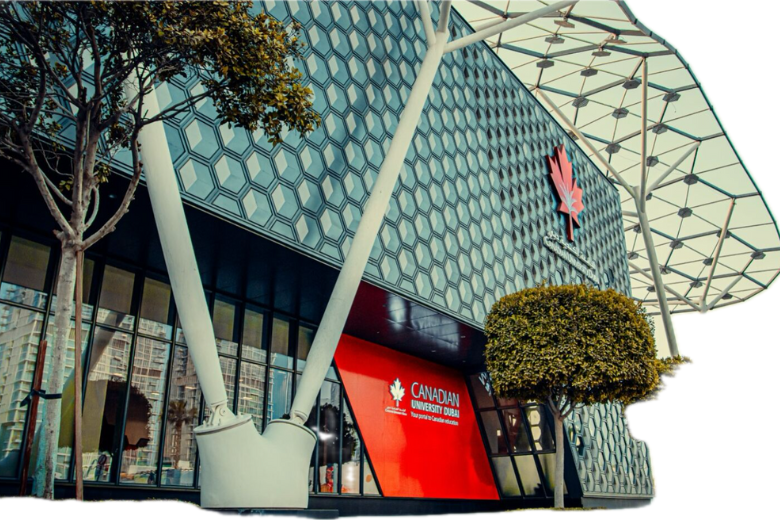
Architecture students from Canadian University Dubai (CUD) are pushing the boundaries of sustainable design with a series of climate-responsive projects set in the heart of Ghaf Woods—Dubai’s pioneering forest-integrated community.
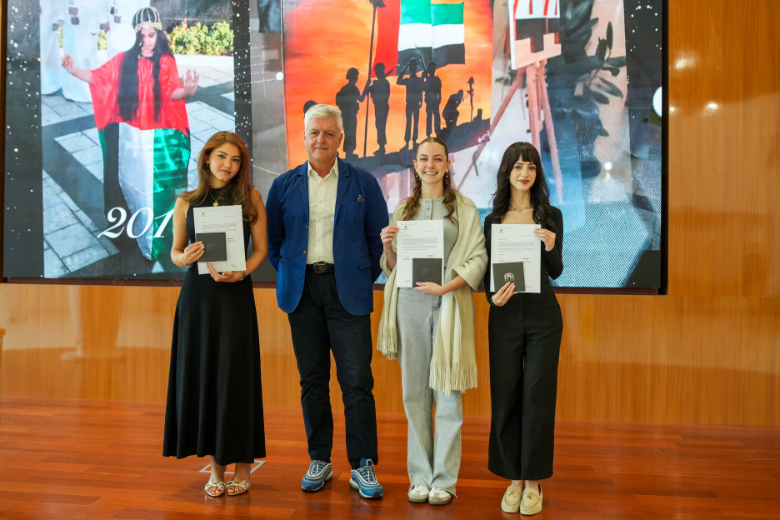
Guided by sustainability and innovation—two of the university’s core pillars—the students were tasked with designing low-rise, multi-use recreation centres that seamlessly integrate with the local landscape and climate. The standout projects featured biomimicry-based structures, solar-integrated cooling systems, and architecture that harmonises with the natural world.
Sustainability in Action: Design Meets Climate Challenge
Set within the real-world context of Ghaf Woods, this living laboratory became a creative canvas for future-focused design. Under the mentorship of Christine Yogiaman, faculty lead at CUD’s School of Architecture, students explored adaptive strategies such as passive cooling, natural ventilation, and thermal mass to reduce energy use in Dubai’s extreme climate.
The results? Visually striking and environmentally intelligent designs that blend theory with practical, people-centred impact.
‘The Canopy’: Biomimicry and Regenerative Shelter
Danica Ferreira’s design, The Canopy, is a serene microclimate inspired by the native Ghaf tree. Using layered shading, passive cooling, and materials like cross-laminated timber and datecrete, the space offers respite from the desert heat.
Danica explained,
“The design acts as a self-regulating microclimate, using innovative materials like datecrete, cross-laminated timber, and photovoltaic components to create a welcoming environment for families and visitors. Light and shadow interplay through multiple canopy layers, transforming the space into a serene retreat, a place for reflection, and a reconnection with nature. The aim is to redefine architecture not just as shelter, but as a regenerative system in harmony with its surroundings.”
‘Respire’: Transforming Heat into a Design Asset
Maya Alhajali’s project Respire reimagines heat as an opportunity rather than an obstacle. Inspired by the lotus flower, the 100 sqm café and recharge station features a PVDF-coated aluminium mesh façade, double-skin ventilation, and a solar chimney that improves building performance as temperatures rise.
Maya noted,
“I wanted to prove that sustainability isn’t a layer to add, it’s a logic to design from.”
‘Al-Dara’: A Pavilion That Breathes with the Forest
Camelia Yaghi’s Al-Dara pavilion offers a sensory experience that honours the surrounding ecosystem. With its retractable roof, elevated timber flooring, and circular design, the structure encourages light, air, and sound to flow naturally within and around it.
Camelia described her approach:
“Visitors are invited into a sensory conversation described by rustling leaves, filtered light, sounds of the forest and scent of materials. It is a living enclosure that is not just seen or touched but also felt.”
A Commitment to Regenerative Design
Commenting on the broader vision behind the initiative, Massimo Imparato, Dean of the School of Architecture and Interior Design at CUD, said:
“The vision and creativity that students have brought forward on this live brief reflect CUD’s commitment to practice-based, research-driven learning. They are redefining the future of architecture with ideas that are human-centred and climate-responsive, and through projects like this, they will graduate with the skills and experience to drive the future of regenerative design and create resilient urban landscapes.”
These projects form part of CUD’s growing efforts to lead the region’s transition toward sustainable urban development. The university recently launched its new Master of Science in Design Innovation for Circular Economy, aimed at training students to create urban environments that promote biodiversity, social wellbeing, and ecological regeneration.
Learn more at:
Further Reading:
- Canadian University Dubai To Lead Three DFF Funded Projects To Advance Healthcare Innovation
- Canadian University Dubai to Host Global Cumulus 2026: A Future-Defining Summit in Regenerative Design
- Canadian University Dubai Celebrates Class of ‘Thank You Sheikha Hind’ at 14th Graduation Ceremony
- Canadian University Dubai Career Fair & Networking Event connects student talent with industry
- Canadian University Dubai launches BSc in Power and Renewable Energy Engineering