





































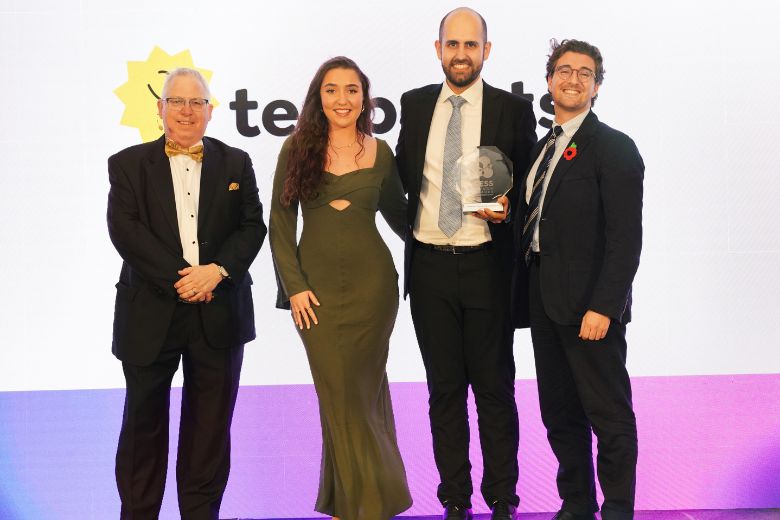
Ten Points, the school platform bringing behaviour and wellbeing into one connected system, recently won the Rising Star, Start Up Company of the Year at the GESS Education Awards 2025, recognising its growing impact on school communities.
Created by educators inside a working school environment, Ten Points was built to address a challenge many teachers face daily. Behaviour and wellbeing are deeply connected, yet they are often managed through separate systems, making it difficult for schools to respond early and consistently.
James Carne, Co Founder of Ten Points, says the recognition reflects a wider shift happening in schools.
“Ten Points was created by educators who were frustrated with the gap between wellbeing conversations and the reality of classroom life. Winning this award shows that schools are ready for more practical, joined up approaches that genuinely support culture, behaviour and student wellbeing.”
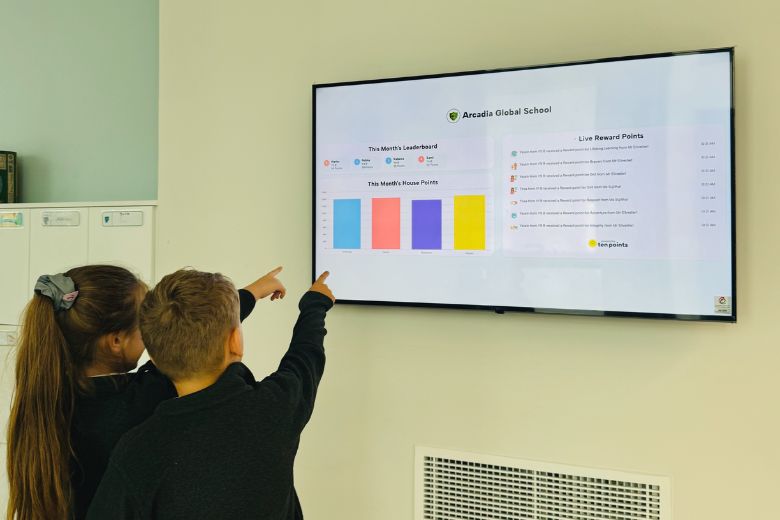
The platform allows teachers to recognise positive behaviour and capture wellbeing signals in real time, while leaders gain a clearer view of emerging patterns across the school. The result is earlier intervention, more consistent practice and a more proactive school culture.

Behaviour is often the visible expression of how students are feeling.
In conversation with James Carne, Co Founder of Ten Points, the recent GESS Rising Star Award reflects more than recognition for a single platform. It signals a wider shift across schools towards more connected, practical approaches that bring behaviour and wellbeing together to better support students and school communities.
Education UAE: Congratulations again on your GESS Award win. What does this recognition mean to you and your organisation?
James Carne: Winning the Rising Star award at GESS is a significant moment for us. Ten Points was built inside a working school, by educators who were frustrated with the gap between wellbeing conversations and day-to-day classroom reality. To have that work recognised by an international panel of educators and sector leaders is both validating and encouraging. It reinforces that schools are ready for more joined-up, practical approaches to behaviour, wellbeing, and culture.
Education UAE: Tell us about your winning product. What inspired its creation, and what challenge were you aiming to solve?
James Carne: Ten Points was created to address a simple but persistent problem in schools: behaviour and wellbeing are deeply connected, yet they are almost always managed through separate systems.
We saw teachers working hard to build positive classroom cultures, while leaders relied on delayed, fragmented data to understand what was really happening across the school. Ten Points brings those two strands together. It gives staff simple tools to recognise positive behaviour and capture wellbeing signals in real time, while giving leaders clear, inspection-ready insight into patterns, trends, and emerging concerns.
Education UAE: What makes your approach truly different or innovative? Why do you believe it stood out to the judges this year?
Our starting point was culture, not compliance. Rather than focusing on sanctions or isolated wellbeing check-ins, Ten Points centres everyday classroom interactions. Behaviour is treated as information, not just an outcome. Wellbeing is understood as something shaped daily by school experience, not just something measured periodically.
Wellbeing is understood as something shaped daily by school experience, not just something measured periodically.
Judges told us that what stood out was how grounded the platform is in real school life. It is not an add-on or a bolt-on. It supports what teachers already do well, while giving leaders a clearer, more connected view of what is happening across their community.
Education UAE: What impact has your initiative had so far on students, staff, families, or the wider community?
James Carne: Schools using Ten Points report clearer expectations, more consistent recognition of positive behaviour, and earlier identification of wellbeing needs. For students, this means feeling seen and understood on a daily basis. For staff, it reduces workload by replacing manual tracking with live insight. For leaders, it provides evidence they can act on, rather than anecdote or retrospective reporting.
Schools using Ten Points report clearer expectations, more consistent recognition of positive behaviour, and earlier identification of wellbeing needs.
Importantly, it has helped shift conversations with families from reactive to proactive, supported by shared language and clear data.
Education UAE: What has been your proudest moment on the journey to achieving this award?
James Carne: Our proudest moments are always the quiet ones. Hearing a teacher say that they now spot patterns earlier, or a student explaining how reflecting on their emotions has helped them self-regulate, matters more to us than any metric. The award is a milestone, but those day-to-day changes are what make the work meaningful.
Education UAE: What were the biggest challenges you faced in bringing this idea to life, and how did you overcome them?
James Carne: One of the biggest challenges was resisting the temptation to overcomplicate things. Schools are busy environments, and any system that adds friction will fail. We spent a great deal of time refining the interface, language, and workflows to ensure Ten Points felt intuitive and genuinely helpful.
Schools are being asked not just what they do, but how they know it works
Another challenge was trust. Schools are rightly cautious about wellbeing data. We addressed this by designing safeguarding, transparency, and professional judgement into the platform from the outset.
Education UAE: How does this win influence your future plans? What can we expect next in 2026?
James Carne: The award gives us confidence to continue scaling carefully. In 2026, our focus is on deepening insight rather than expanding features for their own sake. This includes more advanced analytics for leadership teams, stronger support for secondary settings, and thoughtful expansion of our AI-supported wellbeing tools, always with safeguarding and oversight at the centre.
Education UAE: In your opinion, what is one trend shaping the future of education in the UAE, GCC, or Africa?
James Carne: There is a clear shift towards evidence-informed decision-making around wellbeing and behaviour. Inspection frameworks, leadership expectations, and parental conversations are all moving in this direction. Schools are being asked not just what they do, but how they know it works. Platforms that can connect daily practice with meaningful insight will become increasingly important.
Education UAE: What advice would you give to other educators, leaders, or innovators looking to make a meaningful difference?
James Carne: Start with the lived experience of schools. The most effective ideas come from listening closely to teachers and students and designing around their realities. Innovation does not have to be disruptive to be impactful. Often, the biggest gains come from making existing practice clearer, more consistent, and easier to understand.
The most effective ideas come from listening closely to teachers and students and designing around their realities
Education UAE: Anything else you would like to highlight or thank your team or community for?
James Carne: We are grateful to the schools and educators who trusted us early, shared feedback honestly, and helped shape the platform. Ten Points is the result of genuine collaboration between educators, developers, and leadership teams. This award belongs to that community as much as it does to us.
Ten Points is the result of genuine collaboration between educators, developers, and leadership teams
Education UAE: What problem in schools were you most determined to solve with this product?
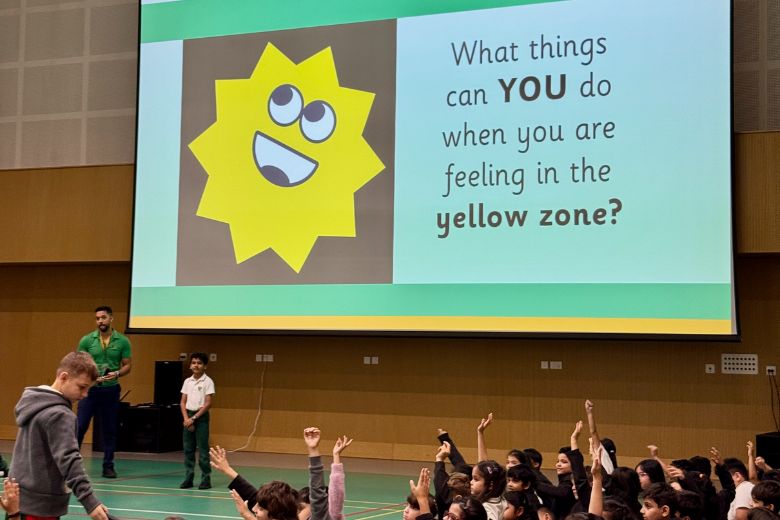
James Carne: We were determined to solve the disconnect between behaviour data and wellbeing understanding. Treating them separately limits how effectively schools can support students. Bringing them together allows for earlier insight, more consistent practice, and stronger school culture.
Education UAE: How have schools responded since adopting your solution?
James Carne: Schools have responded positively, particularly to the clarity and confidence the platform brings. Leaders value having a joined-up picture of behaviour and wellbeing that moves beyond anecdote, while teachers appreciate tools that support recognition and reflection without adding to workload.
That clarity has been especially valuable during inspection. Schools using Ten Points have been able to evidence a consistent, proactive approach to wellbeing and behaviour, aligned with regional inspection frameworks and supported by real-time data and shared language across staff. This has contributed to strong inspection outcomes and external recognition, reinforcing the value of embedding inspection-ready insight into daily practice.
Education UAE: What enhancements or new features are coming in 2026?
James Carne: In 2026, we are expanding our analytics and reporting capabilities, strengthening secondary-phase tools, and continuing to develop AI-supported wellbeing features designed to prompt reflection rather than replace human support.
Everything we build is guided by one question: does this help schools act earlier and more effectively?
To know more about Ten Points, please visit