






































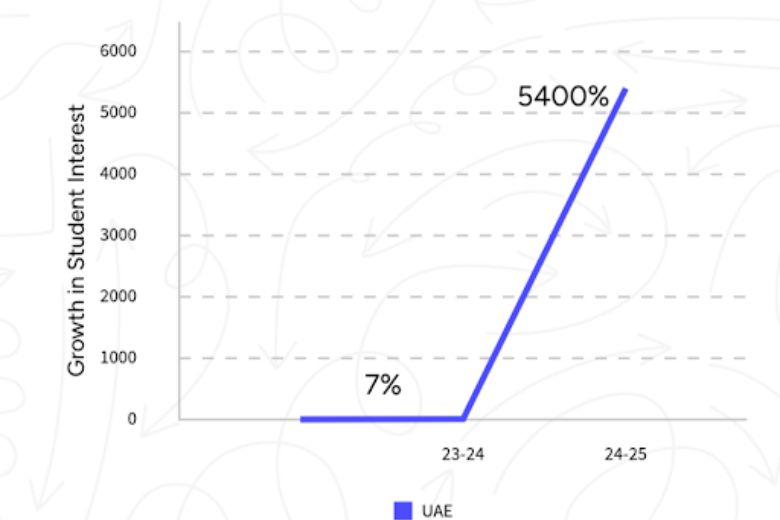
The UAE has emerged as one of the fastest-rising study abroad destinations for Indian students, recording a 5400 per cent year-on-year surge in interest, according to a new report by Leap Scholar. The findings underscore a broader shift in global student mobility driven by affordability, career outcomes and the growing importance of artificial intelligence education.
Released on January 22, 2026, the report titled Beyond Borders: A New Chapter in Global Student Movement analyses more than three million student interactions over five years, offering insight into how global economic pressures, visa policies and AI-driven career opportunities are reshaping study abroad choices.
Students Prioritise ROI Over Prestige
The report indicates that students are making more calculated decisions, focusing on return on investment rather than traditional measures such as university rankings. Arnav Kumar, Co-founder, Leap Scholar said,
“Students are asking a fundamentally different question now. It’s no longer ‘Can I afford to go?’ It’s ‘What will this degree actually give me?’ The data shows they’re making calculated decisions based on ROI, not just prestige.”
Survey data shows that 75 per cent of students rank programme cost and affordability as their top consideration, followed by scholarship availability at 70 per cent. Career advancement ranks third at 58 per cent, graduate salary potential at 49 per cent and faculty expertise at 40 per cent. University rankings did not feature among the top five decision drivers.
Destination Shifts Across Key Markets
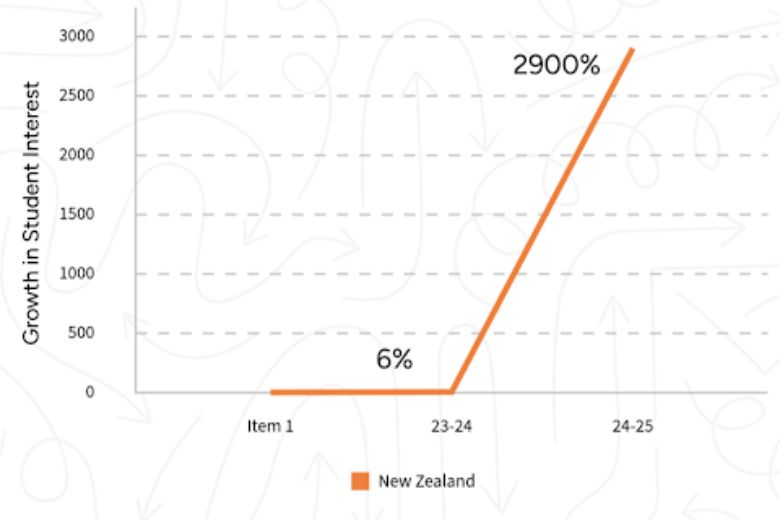
Germany recorded a 377 per cent year-on-year increase in Indian student interest for 2024 to 2025, up from 219 per cent the previous year. New Zealand saw a sharp rise of 2900 per cent, while the UAE experienced the highest growth at 5400 per cent, compared to just 7 per cent earlier.
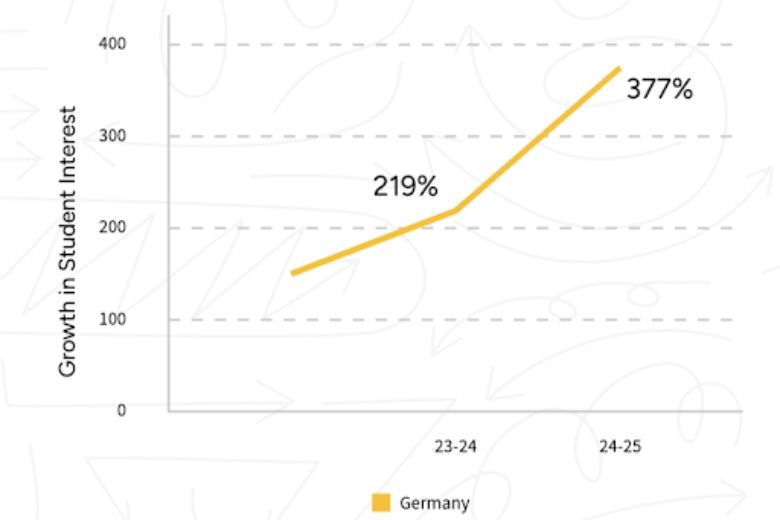
Germany’s appeal is largely driven by its 18-month post-study work visa, which offers strong employment pathways. Vaibhav Singh, Co-founder, Leap Scholar said,
“Career advancement is of utmost priority. Students are selecting locations based on what the degree will give them, not just the university name.”
UAE Gains Momentum as a Cost-Effective Alternative
The UAE’s growth reflects its position as a cost-effective alternative to Western education markets. Lower tuition fees, short flight durations from India and a 3.5 million-strong Indian diaspora have made the country increasingly attractive. International branch campuses in the UAE also offer globally recognised degrees at competitive prices, contributing to its rapid rise.
New Zealand Sees Rapid Uptake
New Zealand continues to gain traction through its Post-Study Work Visa, allowing students to live and work for up to three years. The country’s Green List streamlines residency for critical skills such as engineering and healthcare. With average tuition costs ranging between USD 20,000 and USD 30,000, New Zealand is positioned as a middle ground between quality and affordability.
AI Education Drives Study Decisions
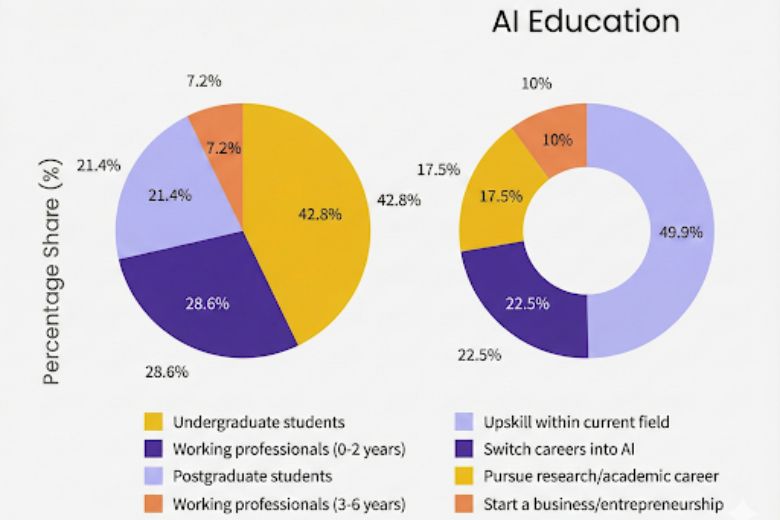
Interest in artificial intelligence programmes surged 186 per cent year-on-year, reflecting the central role of AI in future career planning. Working professionals now account for 36 per cent of AI programme aspirants, with 28.6 per cent having up to two years of experience and 7.2 per cent representing mid-career professionals.
Undergraduate students make up 42.8 per cent of applicants, while postgraduate students represent 21.4 per cent. Nearly half of respondents are pursuing AI education to upskill within their current field, while others aim to switch careers, enter research or launch AI-focused businesses. Rajan Chaudhary, Co-founder, Leap Scholar said,
“These are professionals pausing their careers to future-proof their skills. They’ve concluded AI literacy is no longer optional.”
Preference for Broader AI Programmes
Whilst 40.4 per cent of students pursue specialised Master’s programmes in AI, machine learning or data science, a majority of 59.6 per cent opt for broader degrees that incorporate AI modules. This reflects a strategy of maintaining versatility across sectors such as business, engineering and healthcare while gaining AI proficiency.
Growing Interest in Doctoral Research
PhD interest increased by 60 per cent year-on-year, now accounting for more than 6 per cent of total interest. Growth is concentrated in artificial intelligence and biotechnology research programmes.
Gender Gap Continues to Narrow
Male students represent 58 per cent of applicants compared to 42 per cent female, but the gender gap is steadily closing. Female participation in STEM programmes, particularly AI and data science, continues to rise. Vaibhav Singh, Co-founder, Leap Scholar said,
“Students aren’t passive victims of policy changes. They’re strategic actors making calculated decisions about their futures.”
Methodology
The report analyses application and survey data from more than three million students who engaged with Leap Scholar between 2020 and 2025. Findings reflect directional insights into Indian study abroad trends based on Leap Scholar’s applicant pool.
For more information please visit,