




































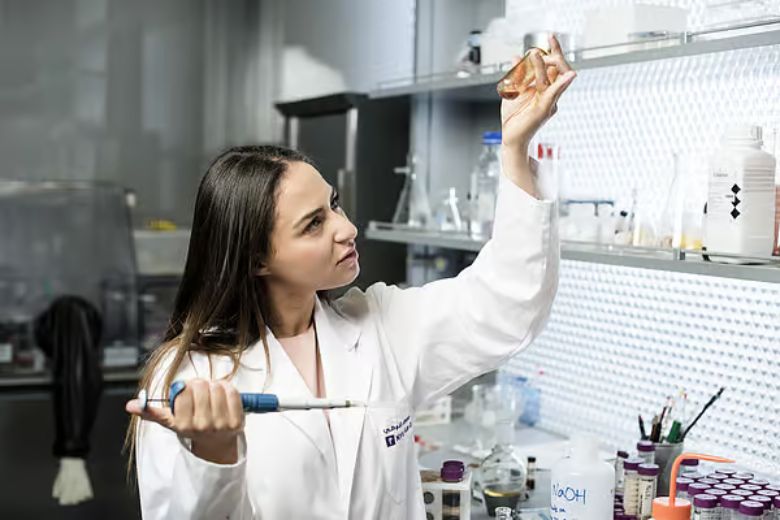
Researchers at New York University Abu Dhabi have developed innovative smart molecules that could transform how brain tumours are detected and treated, offering a dual approach that combines imaging and therapy.
Breakthrough in Glioblastoma Research
The study focused on glioblastoma, one of the most aggressive and common malignant brain tumours in adults. Known for its rapid growth and ability to spread into surrounding brain tissue, the condition remains difficult to treat, with survival typically ranging between 12 and 18 months despite current therapies.
The findings, published in the Journal of the American Chemical Society, highlight a promising step forward in tackling this challenging disease.
“Our goal was to create materials that allow doctors to see cancer clearly and treat it at the same time,” lead researcher Farah Benyettou said. “The ability to image and target brain tumours with high precision is particularly exciting.”
How the Smart Molecules Work
The newly developed molecules remain inactive in healthy tissue but activate when they reach tumour sites, where the environment is slightly more acidic. Once triggered, they release manganese ions that enhance MRI scan contrast, making tumours more visible.
At the same time, the molecules produce a therapeutic effect that helps damage cancer cells, combining diagnosis and treatment in a single platform.
“What makes these molecules unique is not only that they do two jobs at once, but also how they are built, Unlike traditional drugs, which are usually small and simple in shape, these molecules have unusual interlocked structures that allow them to behave differently inside the body.” Benyettou said.
Overcoming the Blood Brain Barrier
One of the most significant challenges in brain cancer treatment is the blood brain barrier, which prevents many drugs from reaching the brain.
The research team found that their molecules were able to cross this barrier and accumulate within glioblastoma tumours, potentially enabling more precise and effective treatment in the future.
Early Stage but Promising Results
The research is still at a preclinical stage and not yet ready for hospital use. Further safety testing, dosage studies and large scale trials will be required before human application can begin.
“In our case, these structures showed strong imaging performance along with encouraging safety and clearance in preclinical studies,” Benyettou said.
Advancing UAE Medical Research
The breakthrough reflects the UAE’s growing investment in advanced healthcare and scientific innovation. Institutions such as Department of Health Abu Dhabi, Cleveland Clinic Abu Dhabi and M42 are driving progress in life sciences, genomics and precision medicine.
“It is very meaningful to achieve this work from Abu Dhabi,” Benyettou said. “It shows the UAE can contribute at the highest level to solving global health challenges, especially in areas like precision medicine.”
If future trials prove successful, the technology could enable doctors to both detect and treat certain tumours using a single, highly targeted approach.
For more information please visit,
Further Reading:
- NYU Abu Dhabi Announces 2026 Recipients of the Sheikh Mohamed bin Zayed Scholarship
- Veteran NASA Astronaut Dr. Andrew Feustel to Deliver NYU Abu Dhabi 2025 Commencement Address