































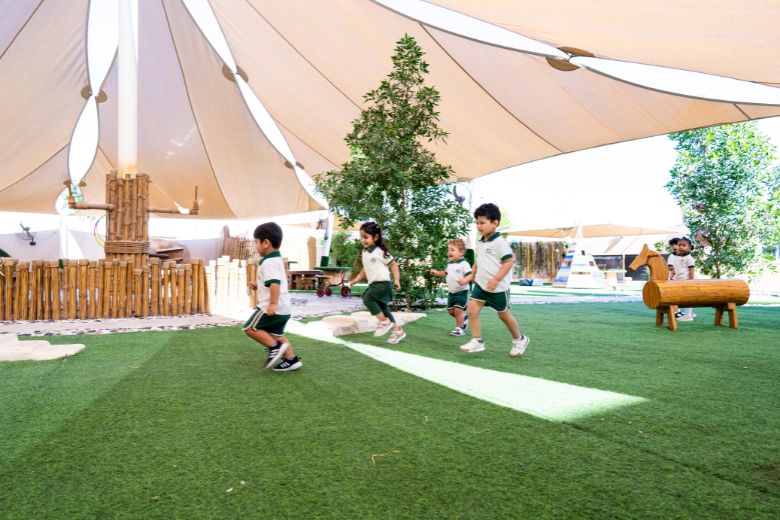
For much of history, education focused on reading, writing, and reciting, leaving little room for children who expressed themselves in different ways. Today, research shows that children process and communicate knowledge through countless forms of expression. This belief lies at the heart of the Reggio Emilia Approach, which celebrates The Hundred Languages of Children.
Learning Beyond Words
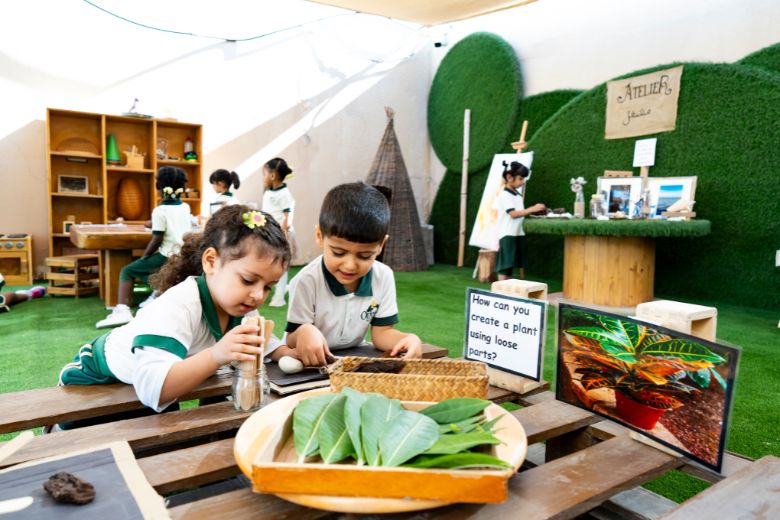
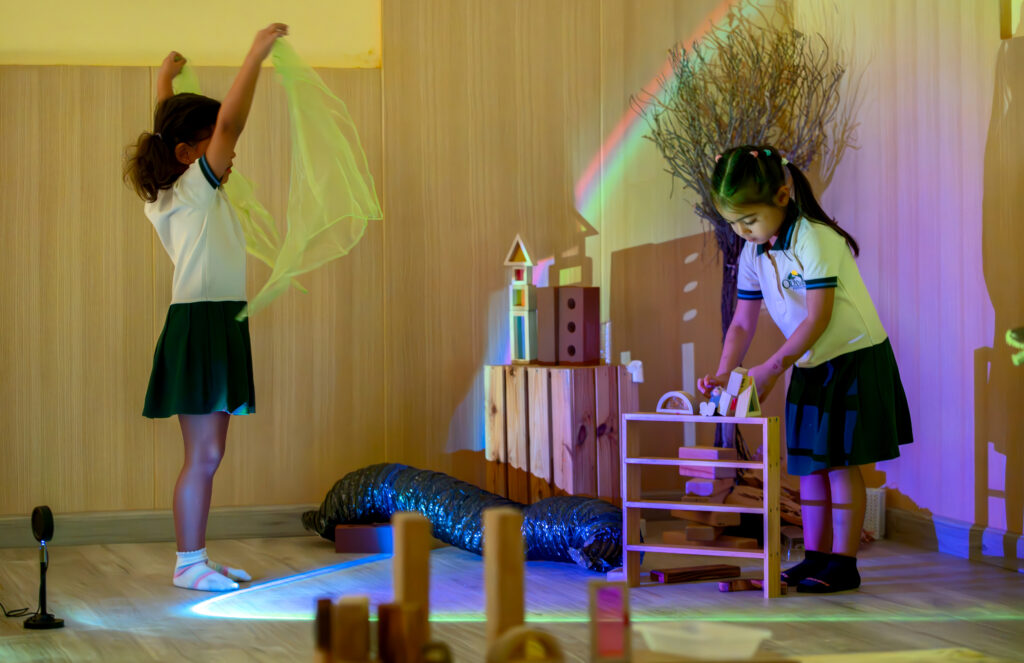
At Odyssey, children are encouraged to explore ideas through materials, light, sound, and nature rather than relying solely on books or worksheets. They sculpt emotions in clay, build towers to explore balance, choreograph dances, and create music from recycled objects. This method is especially empowering for children with speech challenges or those new to Dubai who are still learning English, providing alternative ways to connect, express, and build confidence.
The Atelier: A Creative Heart
At the centre of every Odyssey campus is the Atelier, a vibrant workshop filled with recycled and natural materials. Here, children problem-solve, collaborate, and turn ideas into tangible creations. Whether they are experimenting with light and shadows, designing structures, or expressing feelings through sculpture, the Atelier offers children the freedom to communicate in ways words alone cannot capture.
Nurturing the Hundred Languages
By embracing The Hundred Languages of Children, Odyssey nurtures creativity, collaboration, empathy, and adaptability, essential skills that children carry into school, life, and the future. The result is a learning environment where curiosity thrives, imagination takes shape, and every child’s unique voice is heard.
Further Reading:
- Stepping Away from Screens: Dibber Nurseries Lead Tech-Free Early Learning
- Nurseries Across UAE Go Paper-free with illumine