































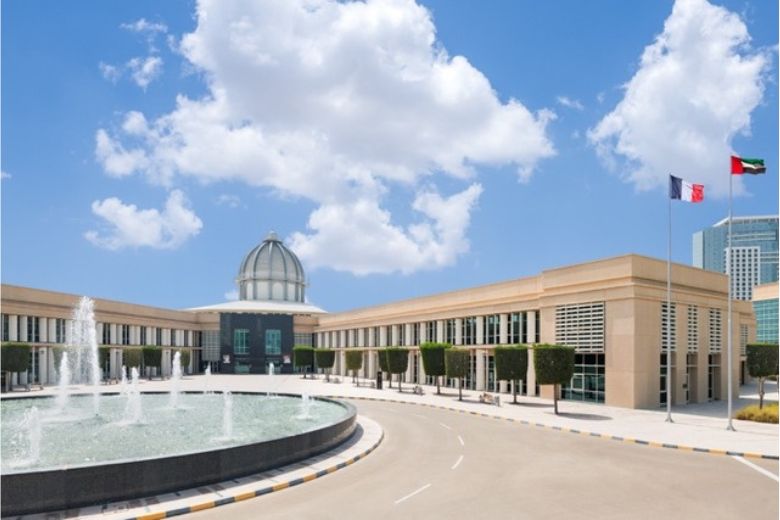
Sorbonne University Abu Dhabi (SUAD), in collaboration with the Asia-Pacific Centre for Environmental Law at the National University of Singapore (APCEL NUS), will host an international symposium on Tuesday, 14 October, at its campus on Al Reem Island.
Ocean Futures: Advancing Decarbonisation and Innovation
Titled Ocean Futures: Advancing Decarbonisation and Innovation in Shipping and Marine Biodiversity through Law, Policy, and AI, the symposium is organised in partnership with the Embassy of Switzerland to the United Arab Emirates and the Kingdom of Bahrain, and the MENA Oceans Initiative by Goumbook.
Part of SUAD’s Year of Ocean initiative, the event underscores the university’s wider commitment to advancing marine research through the SUAD Ocean Institute, launched at COP28. It will gather global experts to explore how policy, law, and innovation can work together to build a more sustainable future for the world’s oceans.
Addressing the Environmental Impact of Shipping
Shipping accounts for more than 80 percent of global trade and approximately 3 percent of global greenhouse gas emissions, according to the Global Maritime Forum. Maritime activities also exert growing pressure on marine biodiversity, from noise pollution and habitat disruption to the spread of invasive species.
In this context, the symposium will focus on three interconnected themes: decarbonisation in the shipping industry, the protection of marine biodiversity, and the use of AI, robotics, and nature-based climate solutions to strengthen ocean governance.
Programme Highlights
The programme will include keynote speeches from sustainability leaders, along with expert panels examining the International Maritime Organisation’s revised greenhouse gas reduction strategy, legal and policy measures to mitigate the ecological impact of shipping, and the potential of AI and robotics in preserving marine biodiversity.
Further discussions will cover biodiversity monitoring across the Gulf Cooperation Council (GCC) region, including the use of autonomous technologies for conservation and research. A live demonstration of Blue AI, an innovative citizen science platform designed to combat plastic pollution in Gulf marine environments, will also take place during the event.
Commitment to Marine Research and Collaboration
Professor Nathalie Martial-Braz, Chancellor of Sorbonne University Abu Dhabi, said: “As part of our Year of Ocean initiative, this symposium reflects our mission to unite knowledge, policy, and innovation to tackle the urgent challenges facing our shared seas. By bringing together diverse perspectives, we aim to advance dialogue and generate practical recommendations based on scientific knowledge that can influence policy and inspire collective action regionally and globally.”
Dr Jolene Lin, Associate Professor at the Faculty of Law, National University of Singapore, and Director of APCEL, stated: “The collaboration between APCEL NUS and SUAD grows stronger each year, demonstrating our shared dedication to safeguarding a sustainable marine environment. Together, we aim to foster cooperation across Southeast Asia, Europe, and the Middle East for the benefit of our oceans.”
Tatiana Antonelli Abella, Founder and Managing Director of Goumbook and Chair of the MENA Oceans Initiative, added: “Decarbonising the maritime sector is not an end in itself; it is a pathway to protecting ocean health. As the Regional Engagement and Delivery Partner for the UN Climate High-Level Champions Team’s Maritime Breakthrough, Goumbook’s MENA Oceans Initiative highlights the need for cross-sectoral collaborations that embed biodiversity and ecosystem protection within maritime transition plans for long-term benefits to climate, nature, and communities.”
Expected Outcomes
Key outcomes of the symposium will include the publication of a policy brief addressing the three main themes discussed during the event, a peer-reviewed academic article, and the establishment of future research initiatives and collaborations between legal scholars, UAE policymakers, and industry leaders.
The event is open to all, with participation encouraged from policymakers, academics, NGOs, industry professionals, students, and members of the public.
For more information about Sorbonne University Abu Dhabi,
Further Reading:
- Sorbonne University Abu Dhabi Honours and Celebrates Women’s Achievements Through Art and Research
- Sorbonne University Abu Dhabi Leads Ocean Dialogue at IUCN World Conservation Congress 2025
- Sorbonne University Abu Dhabi Chancellor and Al Aidarous Lawyer Recognised with French National Order of Merit for Strengthening France-UAE Relations